
It’s 10:30 a.m. You step away from your desk, order a latte and maybe a chocolate chip cookie, exchange a few words with the barista, and return to work refreshed. It feels harmless — comforting, even virtuous if you chose oat milk. But behind that sweet little coffee break lies a surprisingly complex carbon footprint, stretching from tropical farms to global shipping routes to the disposable cup in your hand.
Understanding the climate impact of a coffee break doesn’t mean giving it up. It means seeing the invisible systems that make it possible — and recognizing where the emissions really come from.
 Coffee: A Global Habit with a Global Footprint
Coffee is one of the most traded agricultural commodities in the world. According to the International Coffee Organization, billions of cups are consumed daily.
Most coffee is grown in tropical regions across Latin America, Africa, and Asia, then shipped thousands of kilometers to consumers in Europe, North America, and beyond.
Multiple life-cycle assessment studies have examined the carbon footprint of coffee. While figures vary depending on farming methods and preparation style, research consistently shows that a single cup of coffee carries a measurable climate impact.
For example, a widely cited study published in the Journal of Cleaner Production estimated that a standard cup of drip coffee (about 125 ml) is responsible for roughly 50–60 grams of CO₂-equivalent emissions when considering cultivation, processing, transport, brewing, and waste. Larger servings — such as a 250 ml cup — would proportionally increase that footprint.
At first glance, 50 grams may not sound like much. But multiplied by billions of cups per day, coffee’s global footprint becomes significant.
Where the Emissions Come From
The carbon footprint of coffee is not evenly distributed across its life cycle. Several stages are particularly emission-intensive:
- Cultivation and Processing
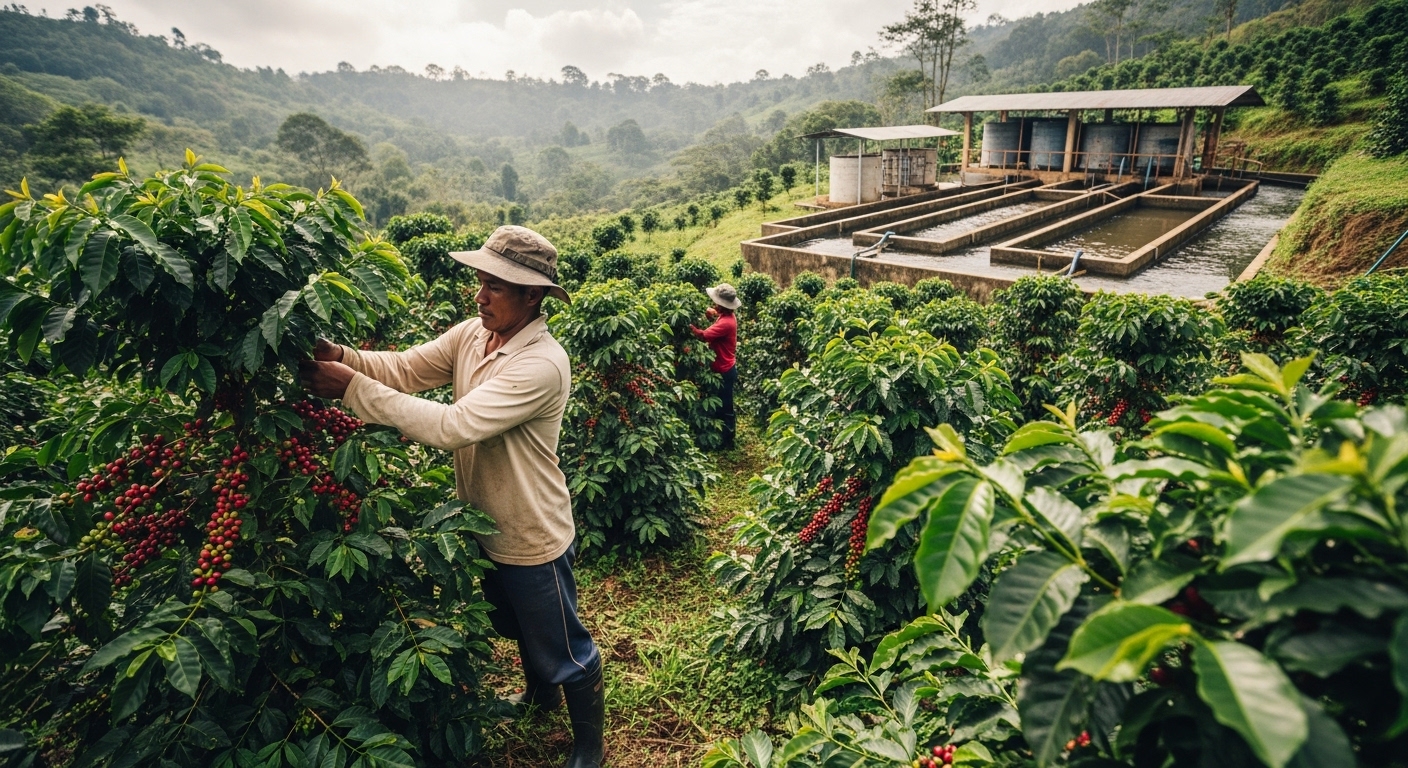 Growing coffee requires land, water, fertilizers, and energy. The production of nitrogen fertilizers — commonly used in conventional coffee farming — is energy-intensive and leads to nitrous oxide emissions, a potent greenhouse gas.
Land-use change is another critical factor. In some regions, forests have been cleared to expand coffee plantations. When forests are cut down, the carbon stored in trees and soil is released into the atmosphere, dramatically increasing the climate impact of the crop.
Processing coffee beans — whether via wet or dry methods — also consumes water and energy. Wet processing, common for Arabica beans, requires significant water and can generate wastewater if not properly managed.
- Transport
Coffee is typically grown far from where it is consumed. Beans harvested in Brazil, Colombia, Ethiopia, or Vietnam may travel by truck, ship, and sometimes rail before reaching roasters and retailers.
Maritime shipping is relatively efficient per ton-kilometer compared to air freight, but given the volume of global trade, transport still contributes meaningfully to overall emissions. Roasting, packaging, and distribution within consuming countries add additional energy use.
- Brewing
Surprisingly, brewing and consumption can represent a large share of coffee’s total footprint.
Heating water requires energy, whether from electricity or gas. Espresso machines in cafés are often kept hot all day, consuming significant electricity. At home, leaving a coffee maker on a warming plate increases emissions.
The amount of coffee used also matters. Overfilling a filter or making more coffee than you drink means more beans were grown, processed, and transported for no benefit.

The Milk Question
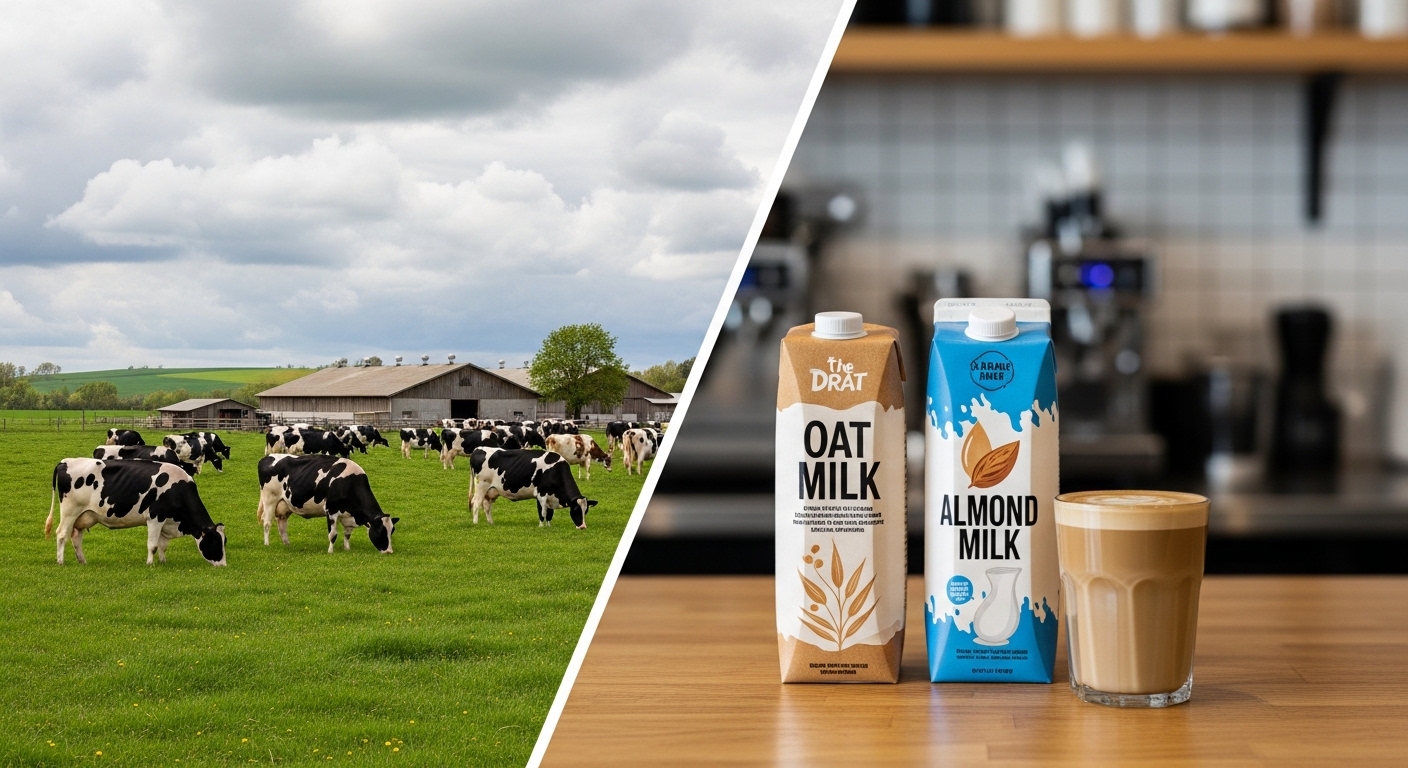
For many people, coffee is only half the story. The milk in a latte or cappuccino can substantially increase the carbon footprint of your break.
Dairy production is one of the most greenhouse gas-intensive forms of food production. Cows emit methane during digestion, and feed production, manure management, and land use add further emissions.
Research consistently shows that adding cow’s milk can significantly raise the footprint of a cup of coffee — sometimes doubling it compared to black coffee. A latte made with 200 ml of dairy milk can have a notably higher carbon impact than an espresso.
Plant-based alternatives generally have lower emissions than dairy milk, though the exact footprint varies. Oat, soy, and almond milks typically produce fewer greenhouse gases per liter than cow’s milk, according to analyses by organizations such as the University of Oxford’s environmental food research groups.
However, almond milk has been criticized for high water use in drought-prone regions, and soy cultivation can be associated with deforestation in some contexts.
Choosing plant-based milk can reduce the climate impact of your coffee, but it is not impact-free.
 Sugar and Sweet Treats
What about the cookie on the side?
Sugar production has its own environmental footprint, involving land use, fertilizers, and processing. But the larger impact often comes from baked goods containing butter, eggs, and chocolate.
Chocolate, in particular, is linked to deforestation in West Africa, where most of the world’s cocoa is grown. Clearing forests for cocoa plantations releases stored carbon and threatens biodiversity.
Studies assessing chocolate’s life-cycle emissions show that cocoa production and dairy ingredients (like milk powder or butter) are major contributors.
A small chocolate chip cookie may carry tens to over a hundred grams of CO₂-equivalent emissions, depending on its ingredients and production methods. Combined with a milk-based coffee, the total footprint of your break can easily surpass that of the coffee alone several times over.
 The Disposable Cup Dilemma
Then there’s the cup.
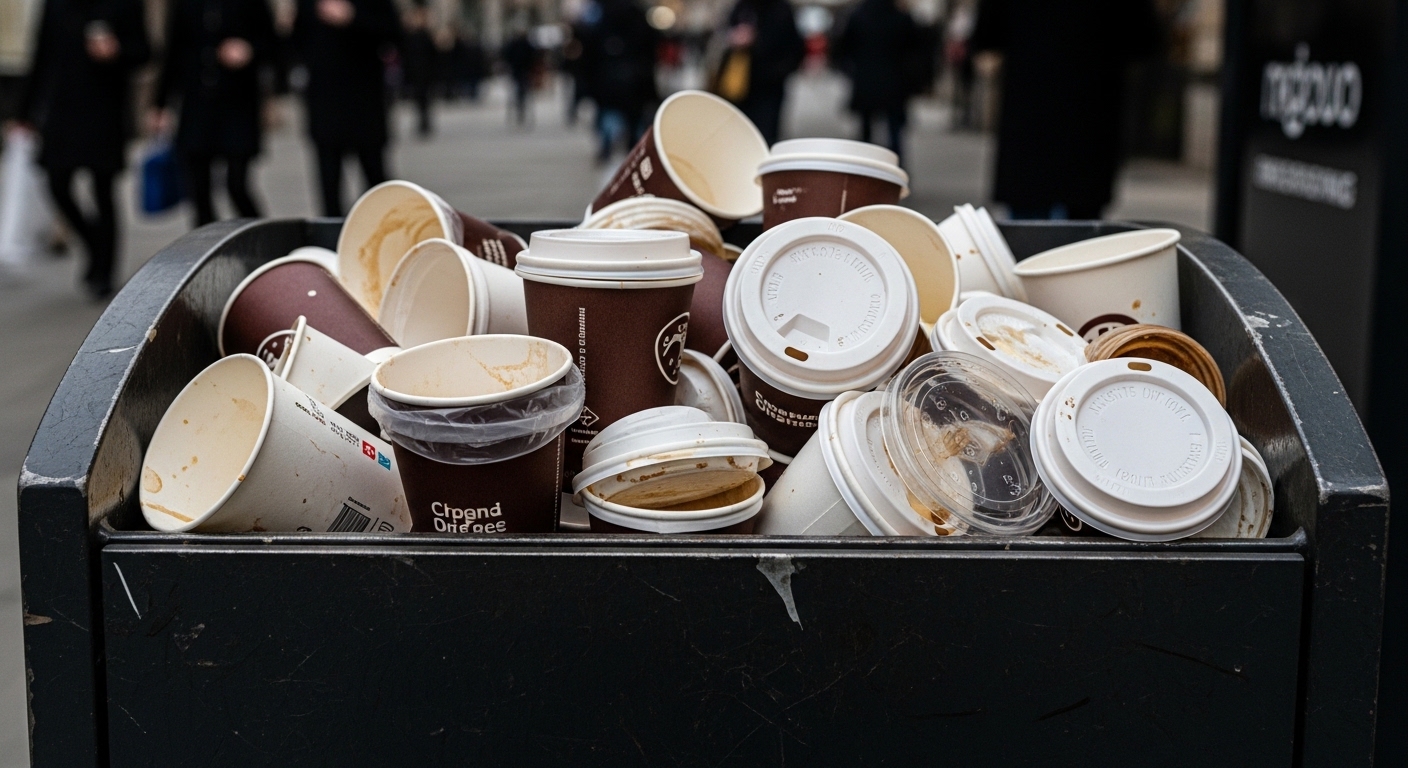
Most takeaway coffee cups are made of paper lined with a thin layer of plastic to prevent leaks. This plastic lining makes them difficult to recycle in standard paper streams. Many end up in landfills or incinerators.
Producing paper cups requires wood pulp, water, and energy. Plastic lids are made from fossil fuels. While the carbon footprint of a single cup and lid is relatively small compared to the coffee and milk inside, the sheer scale of daily consumption makes it significant.
Reusable cups reduce waste and can lower emissions over time, but only if they are used consistently. Manufacturing a reusable cup — especially stainless steel or hard plastic — requires more energy upfront. The environmental benefit comes from repeated use that offsets that initial impact.
 Is Coffee a Climate Villain?
In the broader context of global emissions, coffee is not among the largest contributors. Energy production, transport, heavy industry, and meat consumption account for much larger shares of greenhouse gas emissions worldwide.
However, coffee illustrates how everyday rituals are embedded in global supply chains. Its footprint is real, cumulative, and connected to land use, agriculture, trade, and consumer behavior.
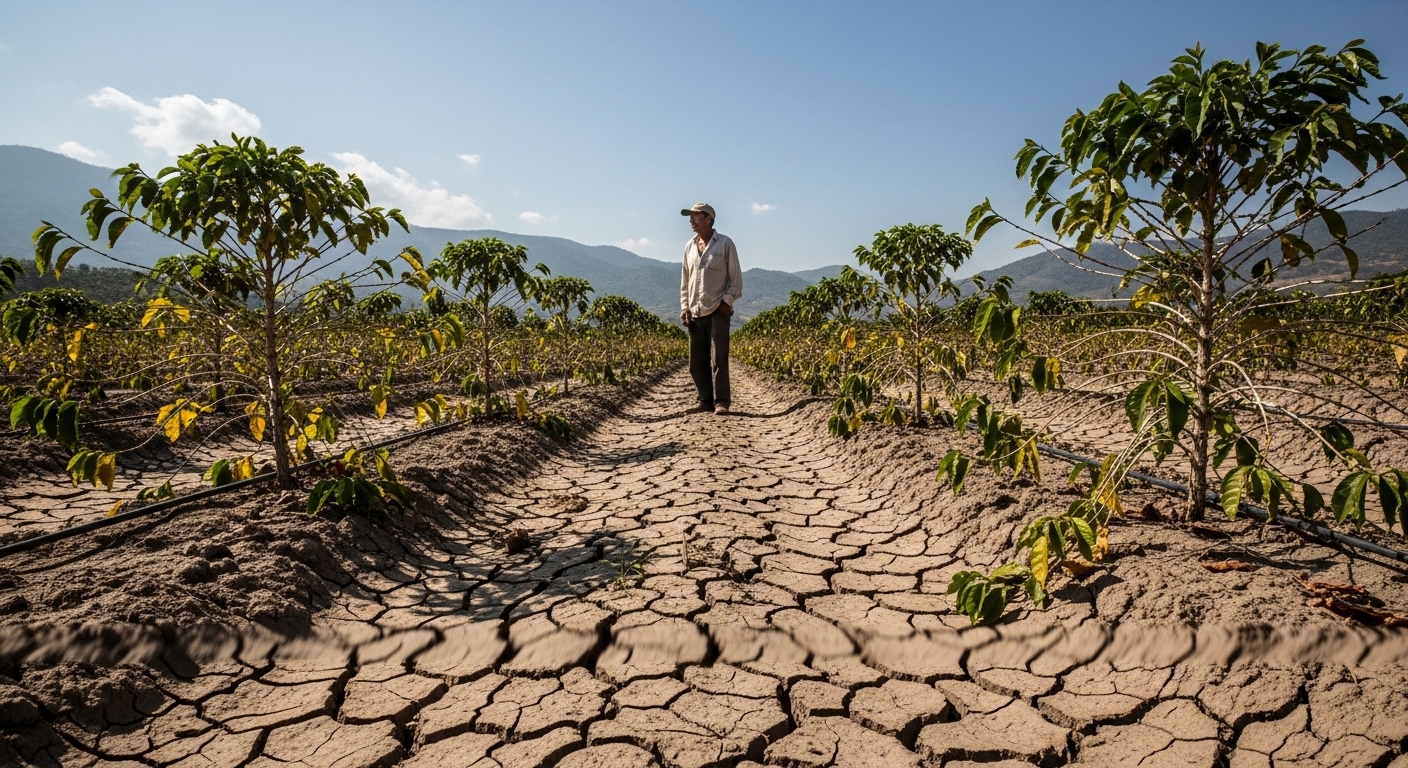
Moreover, climate change itself threatens coffee production. Rising temperatures, shifting rainfall patterns, and increased pests are already affecting yields in key producing countries.
Research suggests that suitable land for Arabica coffee could decline significantly in some regions by mid-century under high-emission scenarios.
In other words, the coffee break is both a contributor to and a victim of climate change.
 What Makes a Lower-Carbon Coffee Break?
For individuals who want to reduce the footprint of their daily ritual, research suggests several evidence-based strategies:
- Drink it black or reduce dairy milk. Cutting back on cow’s milk is one of the most effective ways to lower emissions from coffee consumption.
- Avoid waste. Brew only what you will drink. Reducing food waste avoids emissions embedded in unused beans and ingredients.
- Use a reusable cup. Consistent reuse lowers the environmental burden of single-use packaging. Check our Happy Turtle Cup www.happyturtlecup.com
- Support sustainably sourced coffee. Certifications such as Rainforest Alliance or organic labels aim to promote better environmental practices, though their climate benefits vary and depend on enforcement and farming methods.
- Improve energy efficiency. Turning off machines when not in use and using efficient appliances reduces the brewing stage emissions.
These actions do not eliminate the carbon footprint of coffee, but they can meaningfully reduce it over time.
 A Moment of Awareness
The goal is not to turn pleasure into guilt. Coffee breaks are social rituals, productivity boosters, and moments of calm in busy days. But they are also a reminder that even the smallest indulgences are connected to land, labor, and energy systems that shape the planet’s climate.
The next time you cradle a warm cup between your hands, consider the journey it has taken — from tropical soil to roasting drum to espresso machine. In that awareness lies the possibility of more thoughtful choices.
Your sweet little coffee break may seem small. In isolation, it is. But multiplied across millions of people, every day, it becomes part of a much larger story — one that links personal comfort to global climate responsibility.