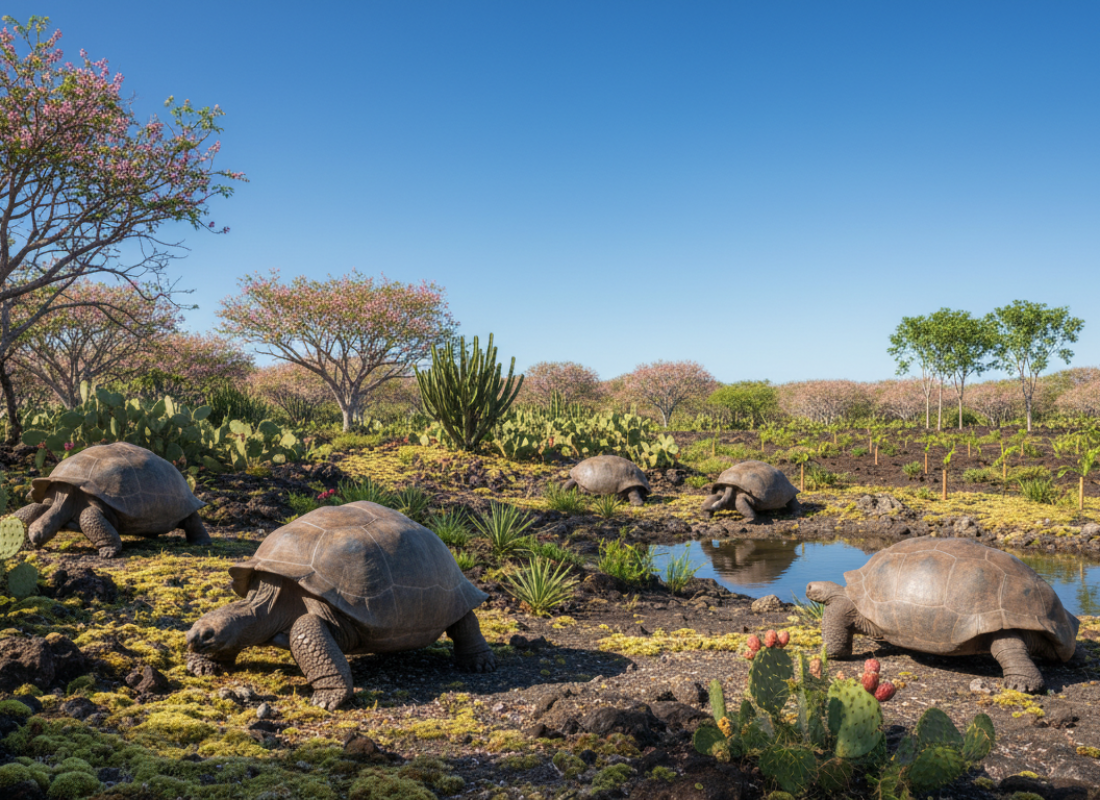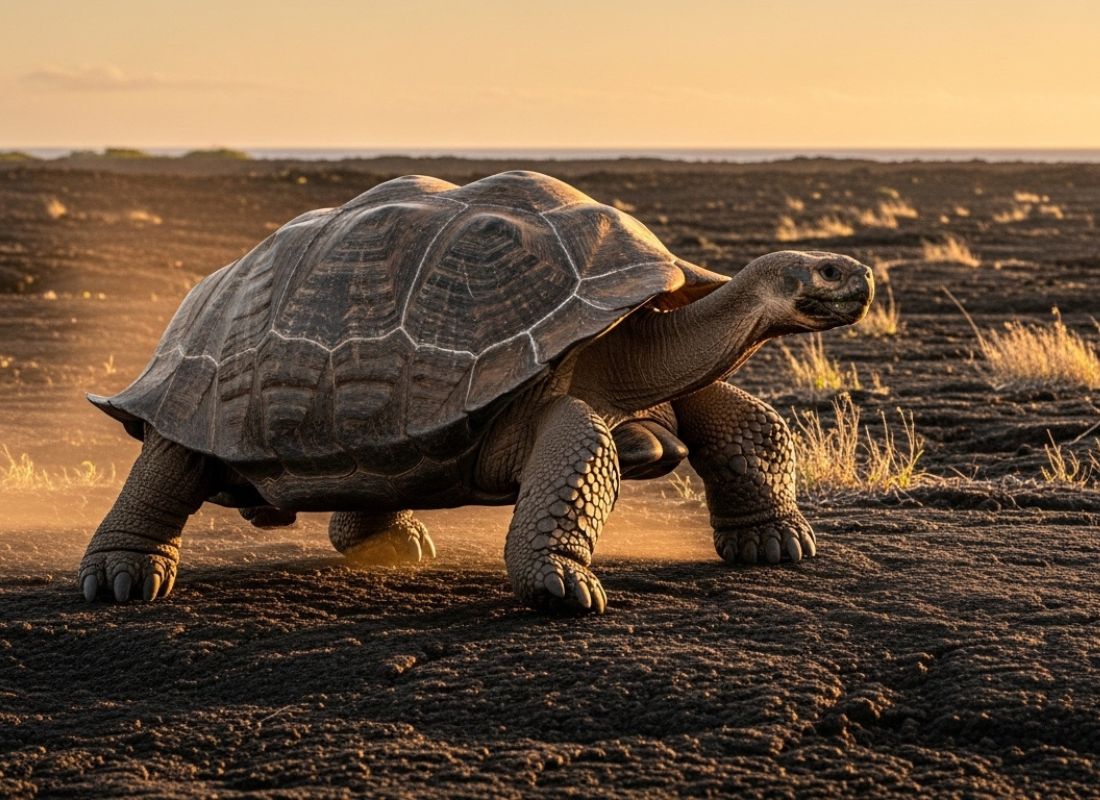
More than a century after their near-erasure from parts of their ancestral home, giant tortoises are lumbering back across the volcanic landscapes of the Galápagos. Their return is not just a conservation milestone; it is a powerful symbol of ecological resilience and human responsibility.
The comeback of these ancient reptiles—icons of evolution and endurance—marks one of the most ambitious and hopeful restoration stories of our time.
A Fragile Eden: The Legacy of the Galápagos Islands
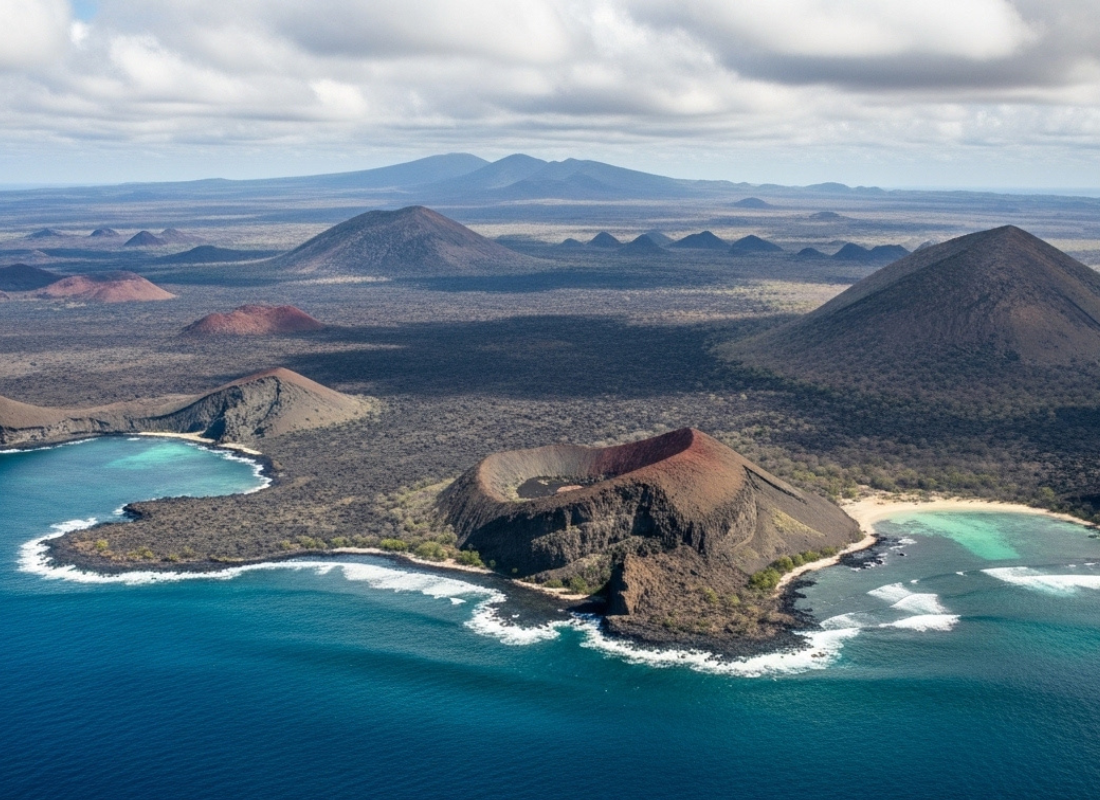 Located roughly 1,000 kilometers off the coast of Ecuador, the Galápagos Islands are among the most biologically unique places on Earth. Forged by volcanic activity and shaped by isolation, the archipelago became a living laboratory of evolution—famously inspiring Charles Darwin during his 1835 visit aboard the HMS Beagle.
But long before conservation became a global concern, the islands’ wildlife paid a heavy price for human exploitation. Beginning in the 17th century, whalers, pirates, and settlers harvested giant tortoises for food.
The reptiles could survive for months without water or food, making them an ideal source of fresh meat during long sea voyages. Thousands were taken. Later, introduced species—goats, rats, pigs, and invasive plants—devastated tortoise habitats and destroyed nests.
By the early 20th century, several tortoise populations had collapsed. Some island subspecies were driven to extinction. Others survived only in captivity or in numbers so small that recovery seemed impossible.
Today, more than 100 years later, conservationists are rewriting that narrative.
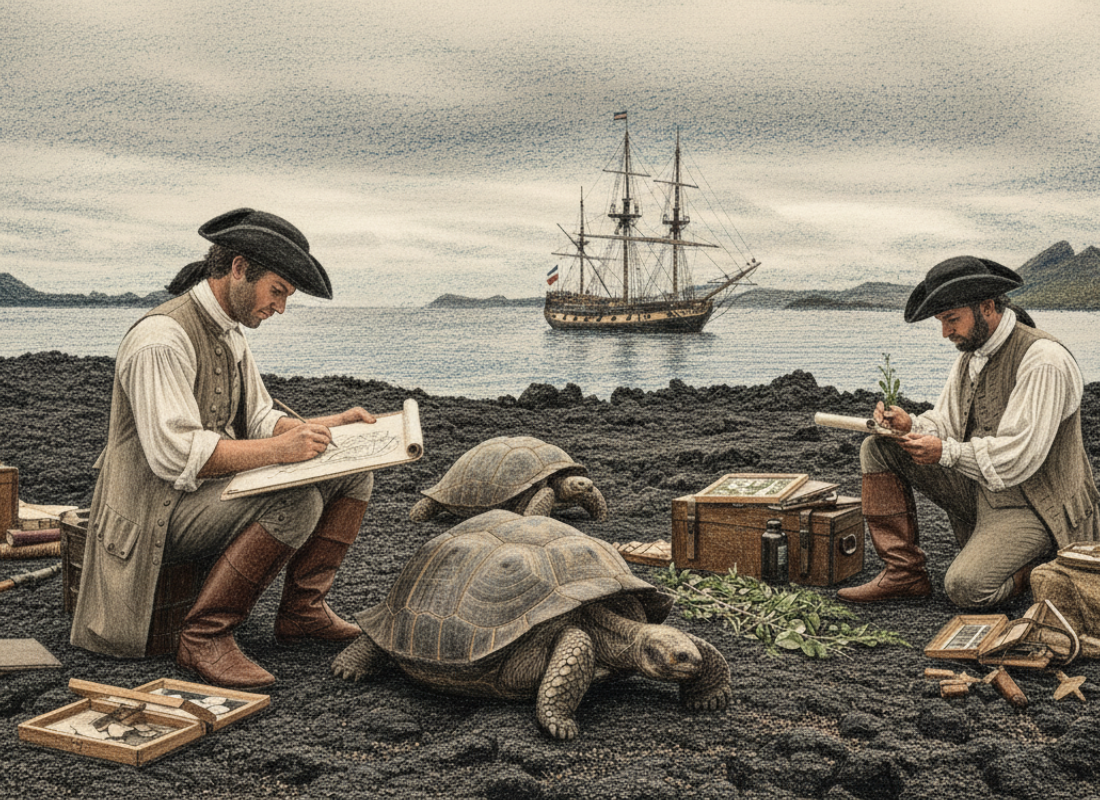 Giants of Evolution: The Story of the Galápagos giant tortoise
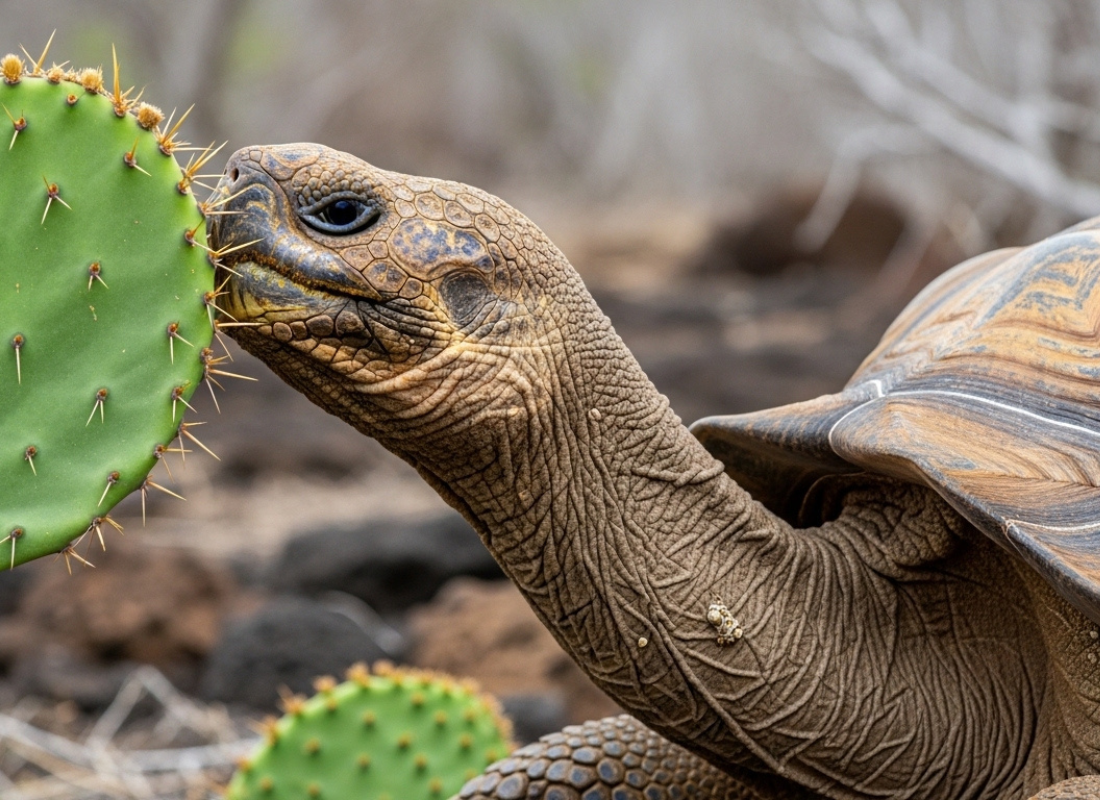
The Galápagos giant tortoise is not a single species but a complex of closely related species and subspecies, each adapted to specific islands. With lifespans exceeding 100 years and weights reaching over 250 kilograms, these tortoises are among the largest on Earth.
Their shapes tell evolutionary stories. Dome-shaped shells dominate humid highlands where vegetation is abundant. Saddleback shells—with raised fronts allowing longer neck extension—evolved on arid islands where food is sparse and higher off the ground.
But tortoises are more than evolutionary curiosities. They are ecosystem engineers. As they move, feed, and defecate, they disperse seeds across vast areas, maintaining plant diversity. Their grazing patterns shape vegetation structure, creating habitats for birds and insects. Remove the tortoises, and the landscape itself begins to change.
In islands where tortoises disappeared, invasive plants took over. Native species declined. The absence of these slow-moving giants triggered cascading ecological effects.
Reintroducing tortoises, therefore, is not simply about saving a species—it is about restoring entire ecosystems.
 The Turning Point: Science, Patience, and Captive Breeding
Modern conservation efforts began in earnest in the 1960s and 1970s with the establishment of the Galápagos National Park Directorate and the Charles Darwin Foundation. Scientists launched captive breeding programs to save the remaining tortoises from extinction.
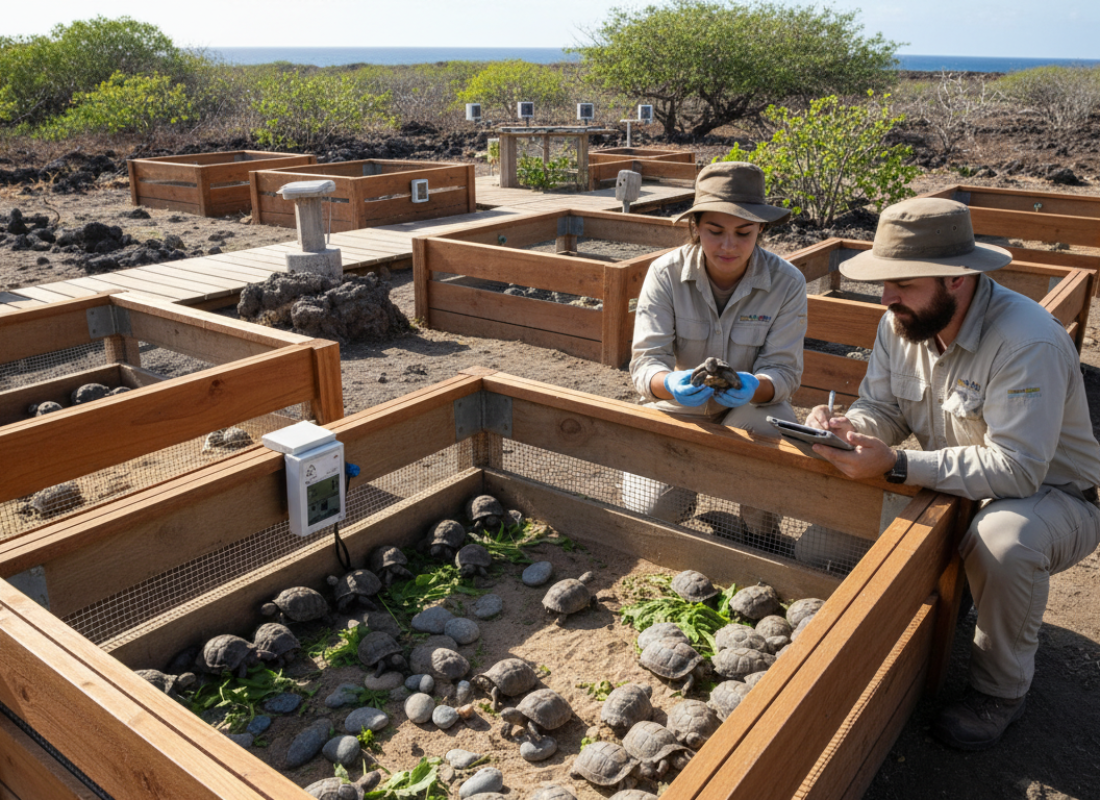
Eggs were collected from vulnerable nests and incubated in protected facilities. Hatchlings were raised in captivity during their most fragile years—shielded from predators such as rats and feral dogs—before being released into the wild once large enough to survive.
Over decades, thousands of young tortoises were repatriated to islands where populations had dwindled. On Española Island, for example, a breeding program that began with just 15 surviving tortoises has resulted in more than 2,000 individuals reintroduced into the wild.
These successes were not immediate. Tortoises grow slowly. They take decades to reach sexual maturity. Conservationists had to think in generational time, committing to a future they might never personally witness.
 Clearing the Way: Removing Invasive Species
Reintroduction would have been futile without tackling one of the primary causes of decline: invasive species. Goats, introduced by sailors and settlers, multiplied rapidly and stripped islands of vegetation. On some islands, landscapes were reduced to barren fields.
In one of the largest ecological restoration campaigns ever undertaken, conservation teams eradicated tens of thousands of goats using coordinated ground and aerial operations. The effort was controversial and logistically complex, but it proved transformative.
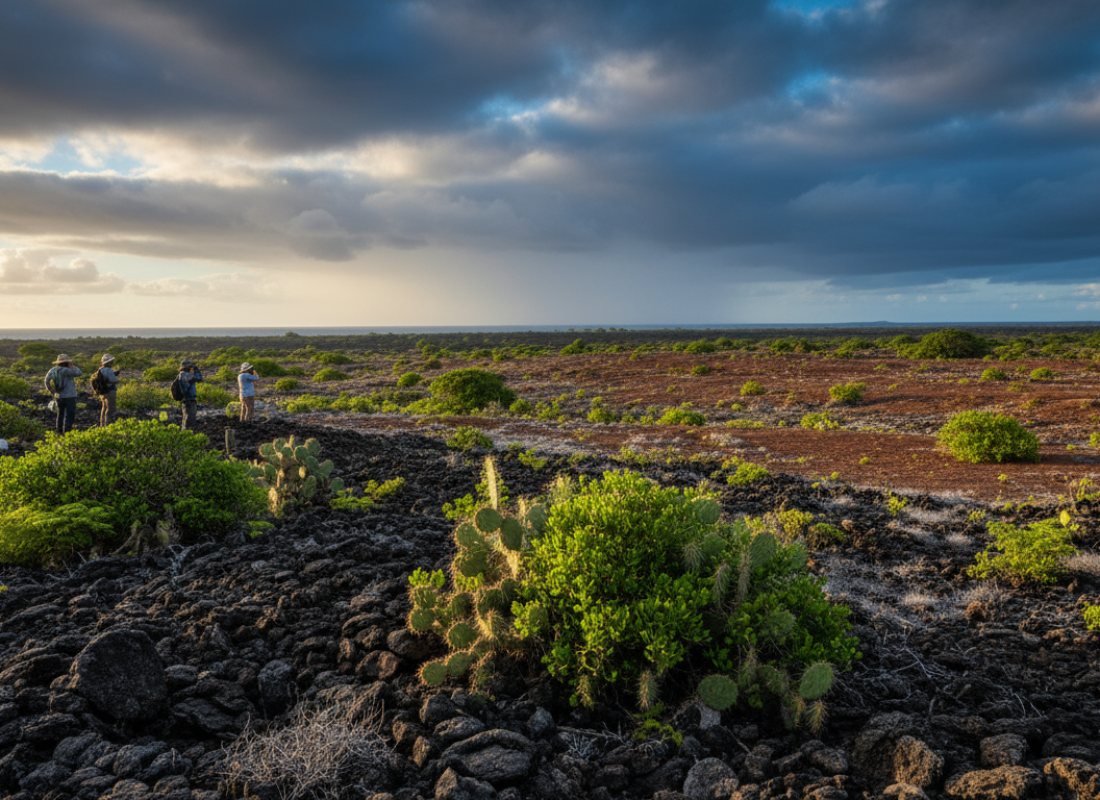
As vegetation began to recover, the islands once again became suitable habitats for tortoises. Native plants rebounded. Soil stabilized. With ecological pressures reduced, the stage was finally set for the giants’ return.
 A Historic Reintroduction After a Century
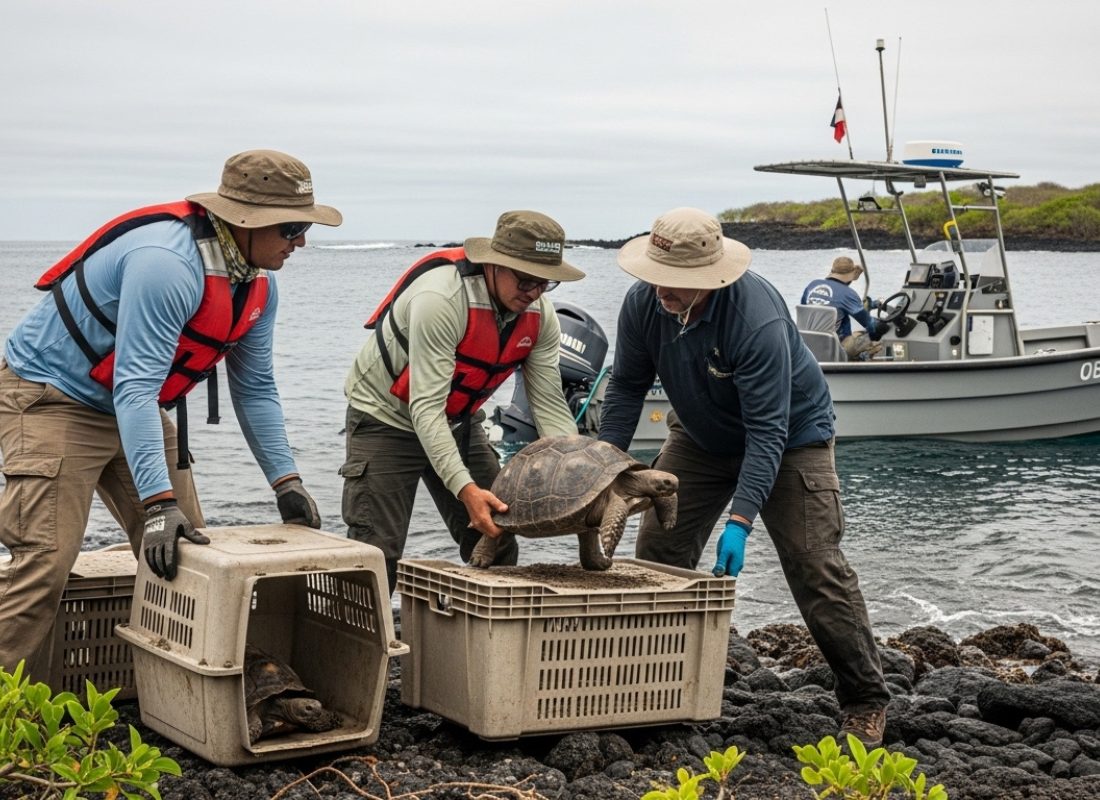
In recent years, conservationists have reintroduced giant tortoises to islands where they had been absent for more than 100 years. These carefully planned translocations involve transporting juvenile tortoises by boat and truck, monitoring them via GPS tags, and conducting long-term ecological assessments.
The results are promising. Released tortoises have begun dispersing seeds, opening pathways through dense vegetation, and reestablishing natural grazing cycles. Scientists report measurable improvements in plant diversity and habitat structure in areas where tortoises roam once again.
Perhaps most remarkably, some islands are seeing tortoises reproduce naturally in the wild for the first time in over a century—a sign that the ecological balance is slowly being restored.
 Lessons in Genetic Resurrection
The story of Galápagos tortoises also includes a fascinating chapter in genetic detective work. On certain islands, researchers discovered tortoises with mixed ancestry—descendants of populations thought to be extinct. By analyzing DNA, scientists identified individuals carrying genetic lineages from lost subspecies.
Selective breeding programs are now attempting to recover these genetic traits, essentially reconstructing populations that had vanished. While not true “de-extinction,” these efforts represent an innovative blend of conservation biology and evolutionary science.
They also underscore a critical point: extinction is often more complicated than a simple disappearance. Genetic legacies can persist, waiting to be rediscovered.
 Climate Change and the Road Ahead
Despite these achievements, the future of the Galápagos remains uncertain. Climate change poses new challenges. Rising temperatures and shifting rainfall patterns could alter vegetation zones. More intense El Niño events may impact food availability.
Human pressure also continues. Tourism—while economically vital—must be carefully managed to prevent ecological strain. Strict biosecurity measures are in place to prevent new invasive species from reaching the islands, but constant vigilance is required.
The reintroduction of giant tortoises is therefore not the end of the story. It is part of an ongoing commitment to adaptive conservation in a changing world.
 Why This Comeback Matters Globally
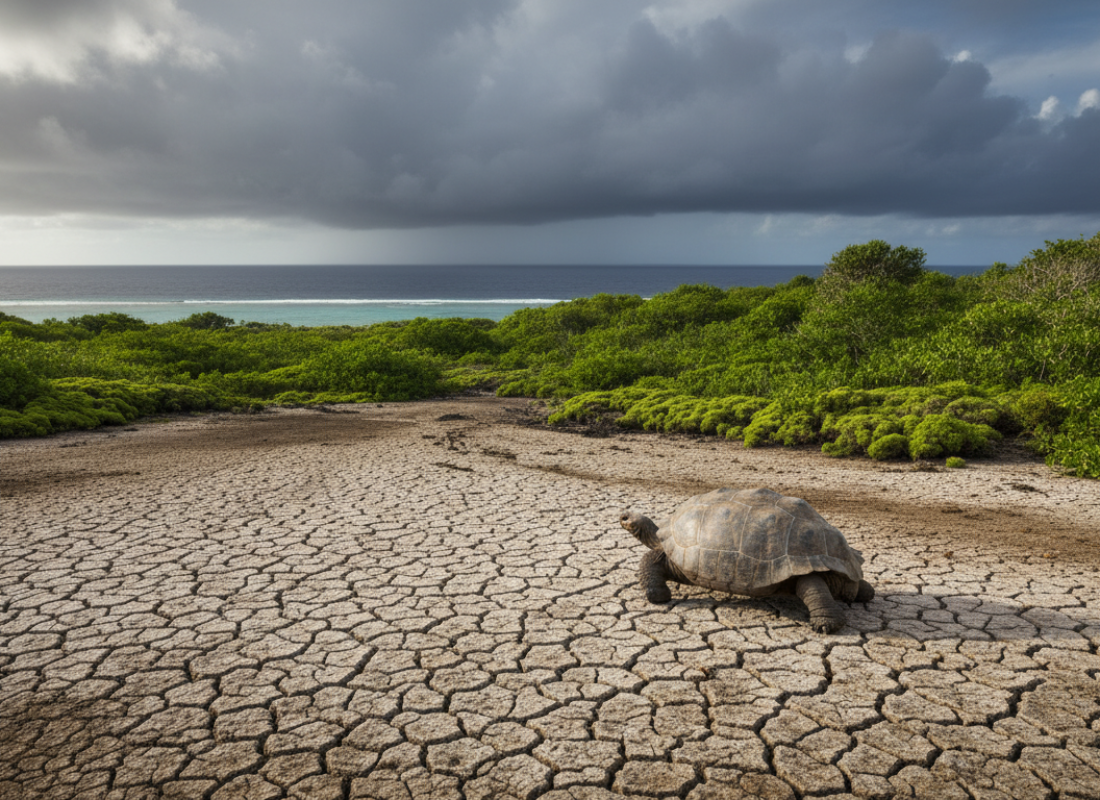
The return of giant tortoises to the Galápagos sends a powerful global message. In an era dominated by headlines of biodiversity loss, it demonstrates that restoration is possible. It proves that long-term investment, international collaboration, and evidence-based policy can reverse even century-old damage.
The Galápagos model is now influencing rewilding projects worldwide. From restoring bison in North America to reintroducing large herbivores in European reserves, conservationists are applying similar principles: remove threats, rebuild populations, and restore ecological processes.
But the tortoise story stands apart for its symbolism. These animals are living links to deep evolutionary time. They survived volcanic eruptions, shifting continents, and natural climate cycles—only to be nearly erased within a few generations of human arrival.
Their slow, steady return feels almost poetic.
 A Future Written in Footprints
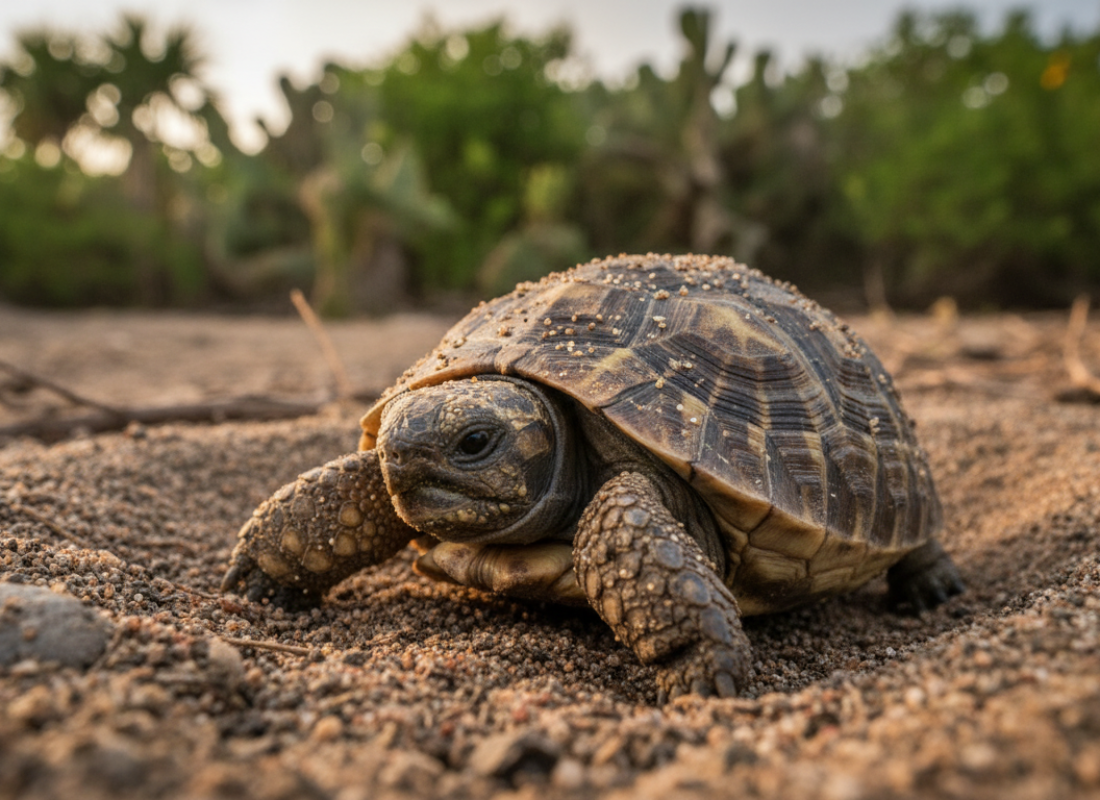
On sunlit lava fields, young tortoises now leave tracks where none had been seen for a century. Each footprint is a reminder that extinction is not always inevitable—and that restoration, though slow and complex, can succeed.
The comeback of the Galápagos giant tortoise is not merely a conservation victory. It is a testament to patience, science, and the willingness to correct past mistakes. More than 100 years after their disappearance from parts of the archipelago, these ancient reptiles are once again shaping the land that shaped them.
And in their unhurried march across the islands, they carry something more than survival. They carry hope.