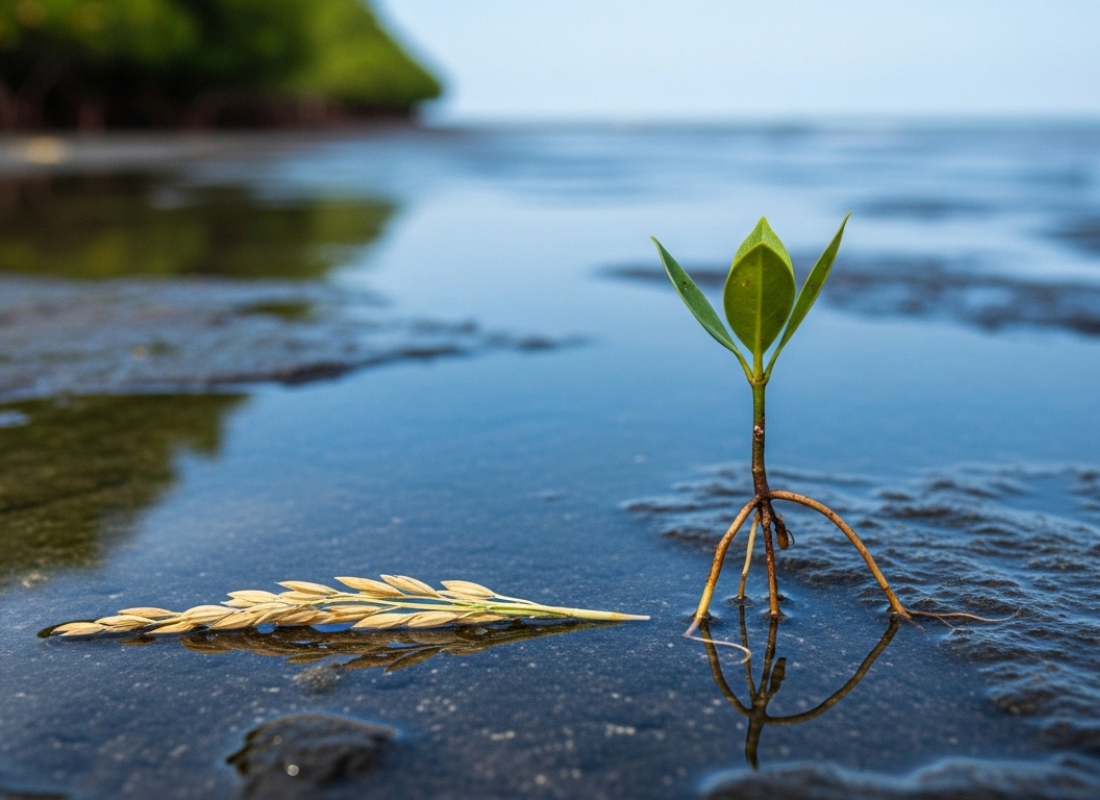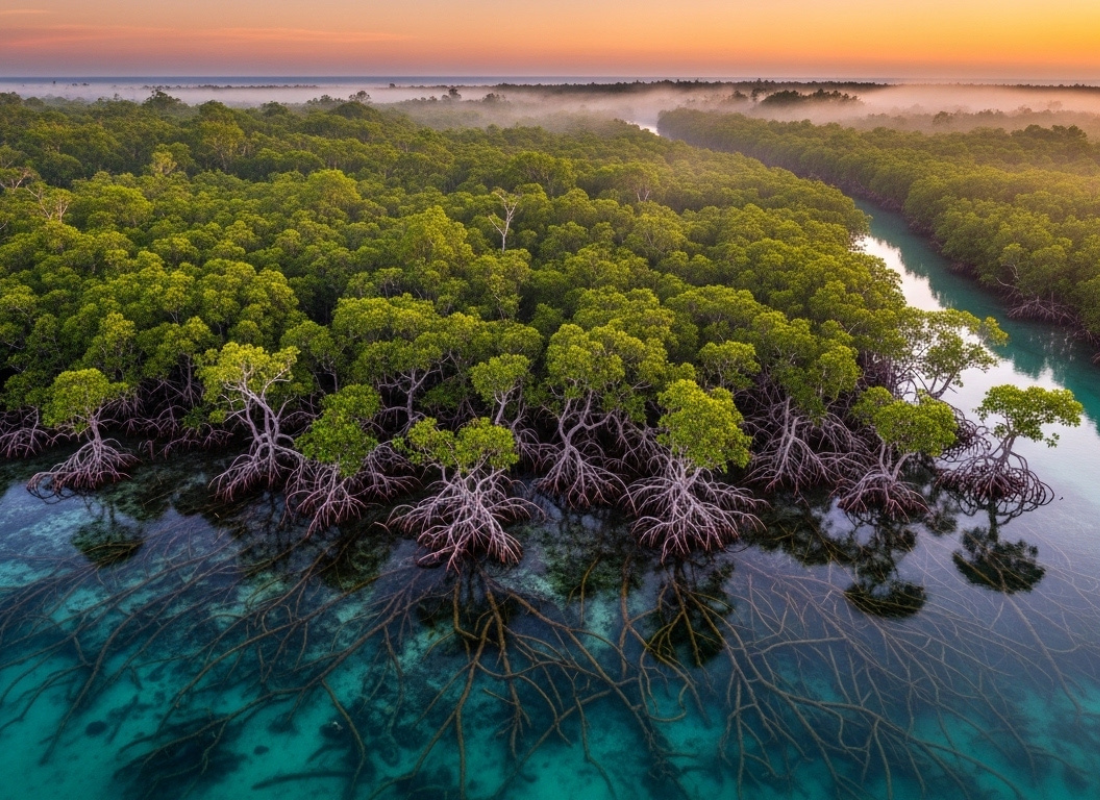
At the edge of the world, where land dissolves into sea, there grows a forest unlike any other. Its roots twist and arch above the waterline like the legs of giant spiders, gripping the muddy shore with extraordinary tenacity. Its canopy shelters an improbable abundance of life — birds nesting in the branches above, fish weaving through the roots below, crabs scuttling across the tidal floor. It floods twice a day and survives. It is battered by storms and stands firm. It breathes in carbon and breathes out oxygen, quietly and ceaselessly, at the boundary between two worlds.
This is the mangrove forest — one of the most extraordinary and most threatened ecosystems on Earth, and one of our greatest natural allies in the fight against climate change, coastal erosion, and the collapse of marine biodiversity.
What Are Mangroves?
Mangroves are a group of trees and shrubs — roughly 80 species in total — that have evolved to thrive in the intertidal zones of tropical and subtropical coastlines. They are found across more than 120 countries, from the vast delta forests of Bangladesh and Myanmar to the sun-bleached coasts of Florida, the tangled shores of West Africa, and the remote islands of the Pacific.
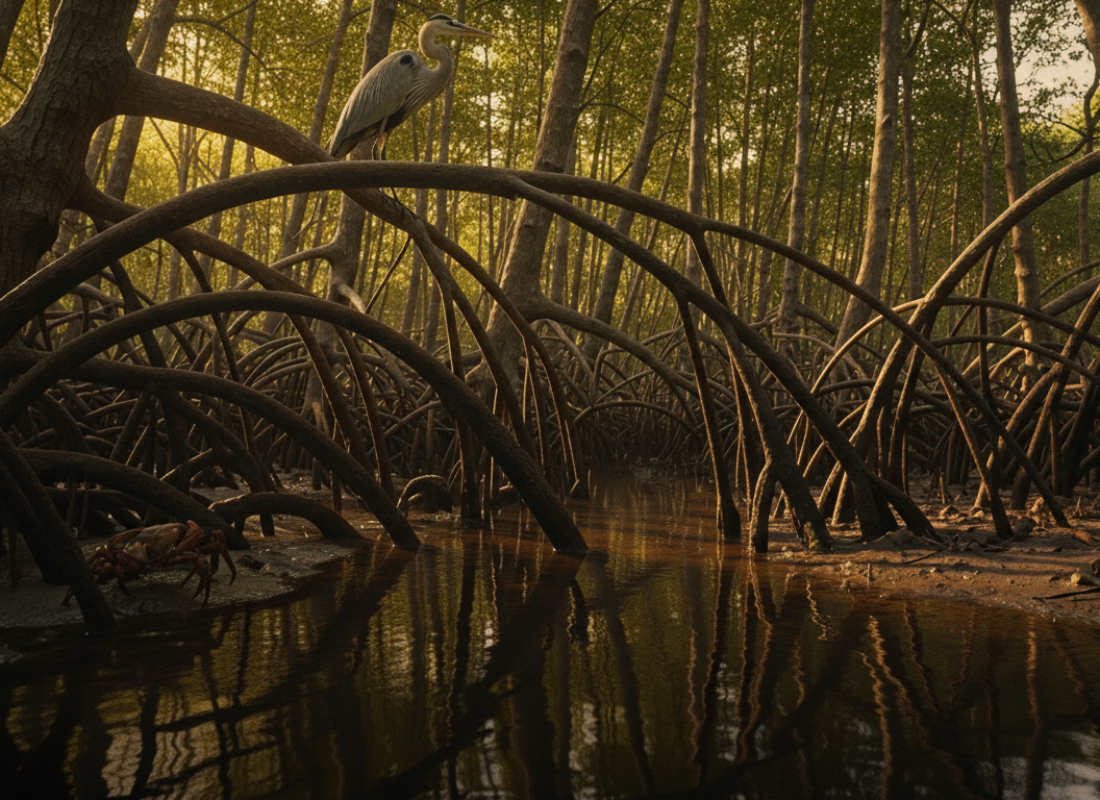
What makes mangroves truly remarkable is their ability to survive in conditions that would kill virtually any other tree. They tolerate saltwater that would be toxic to most plants, anchoring themselves in oxygen-poor, waterlogged soils with their iconic network of aerial roots. They can withstand regular flooding, fierce tropical storms, and dramatic fluctuations in salinity and temperature.
Over millions of years of evolution, mangroves have become the ultimate coastal survivors — and in doing so, they have created one of the most productive and biodiverse habitats on the planet.
Guardians of the Coastline
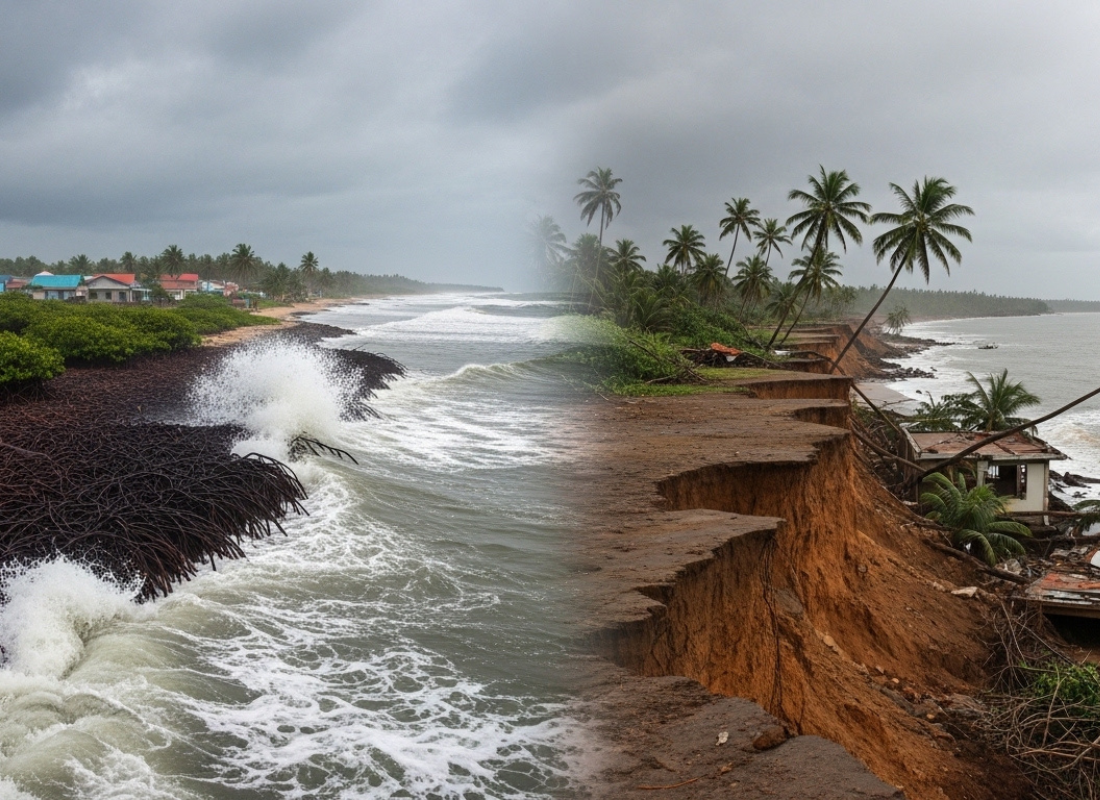
One of the most critical roles mangroves play is protecting coastlines from erosion, storm surge, and the rising seas driven by climate change.
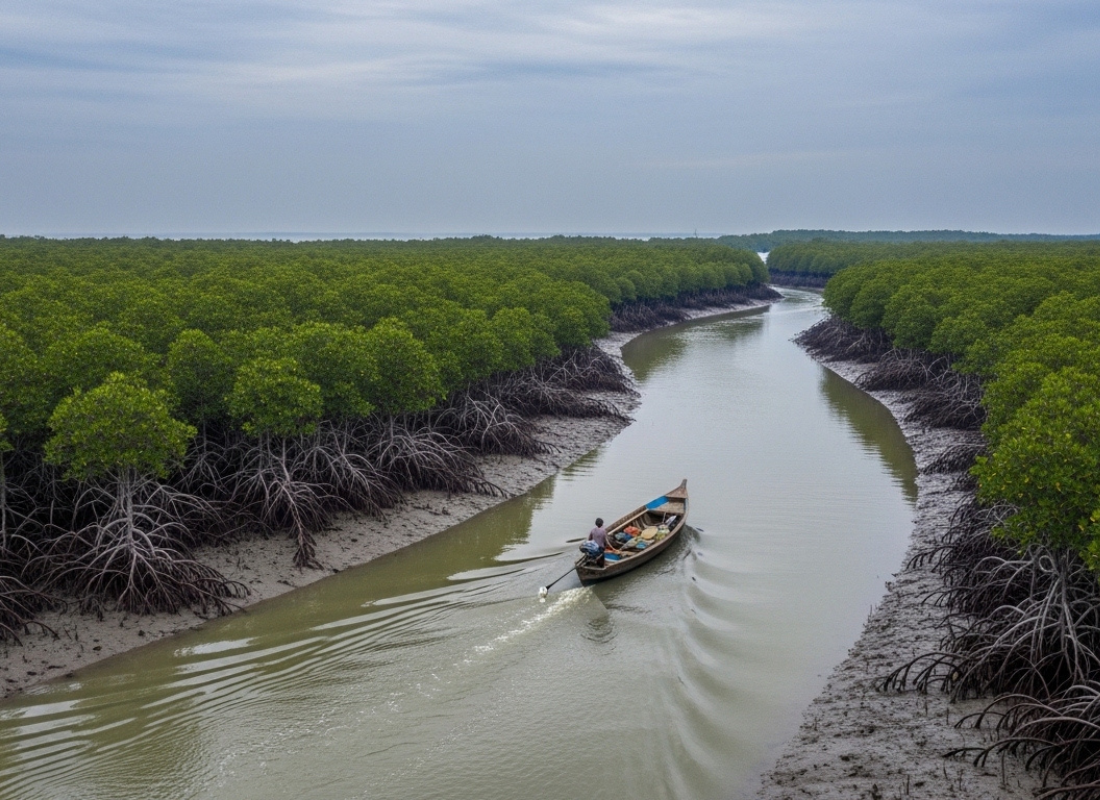
Their dense, interlocking root systems act as a natural buffer, absorbing the energy of waves and currents before they can erode the shore. Studies have shown that mangrove forests can reduce wave height by up to 66% and significantly diminish the destructive power of storm surges — a finding with profound implications as tropical storms intensify and sea levels rise.
During the devastating 2004 Indian Ocean tsunami, coastal communities sheltered behind intact mangrove forests suffered dramatically less damage than those where mangroves had been cleared. Villages with healthy mangrove buffers reported fewer casualties and less structural destruction, a stark real-world demonstration of what these forests provide.
For the hundreds of millions of people who live in low-lying coastal areas — many of them among the world’s most vulnerable communities — mangroves are not just an environmental asset. They are a lifeline.
Carbon Vaults of the Sea
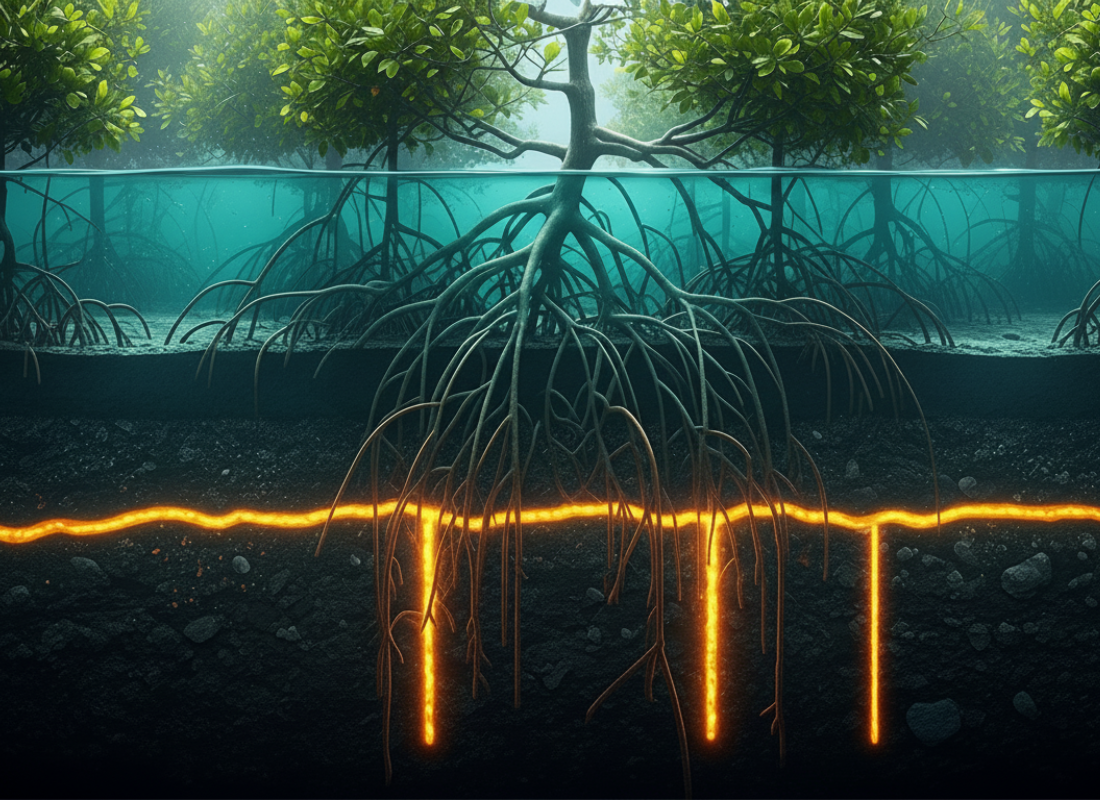
Mangroves are among the most carbon-dense ecosystems on Earth. Despite covering less than 1% of the world’s tropical forest area, they store a disproportionate amount of carbon — both in their above-ground biomass and, crucially, in the deep, oxygen-poor soils beneath them.
This soil carbon, accumulated over thousands of years of leaf litter, root matter, and organic sediment, can extend several meters below the surface. Scientists estimate that mangrove soils store up to four times more carbon per hectare than tropical rainforests — making them some of the most powerful carbon sinks on the planet.
This carbon is known as “blue carbon” — the carbon stored by coastal and marine ecosystems, including mangroves, seagrasses, and salt marshes. Protecting and restoring these ecosystems is increasingly recognized as one of the most cost-effective strategies for climate change mitigation available to us.
When mangroves are destroyed — cleared for shrimp farms, urban development, or timber — this ancient carbon is released back into the atmosphere, turning a powerful carbon sink into a significant source of greenhouse gas emissions. The destruction of one hectare of mangrove forest can release carbon equivalent to burning thousands of barrels of oil.
Nurseries of the Ocean
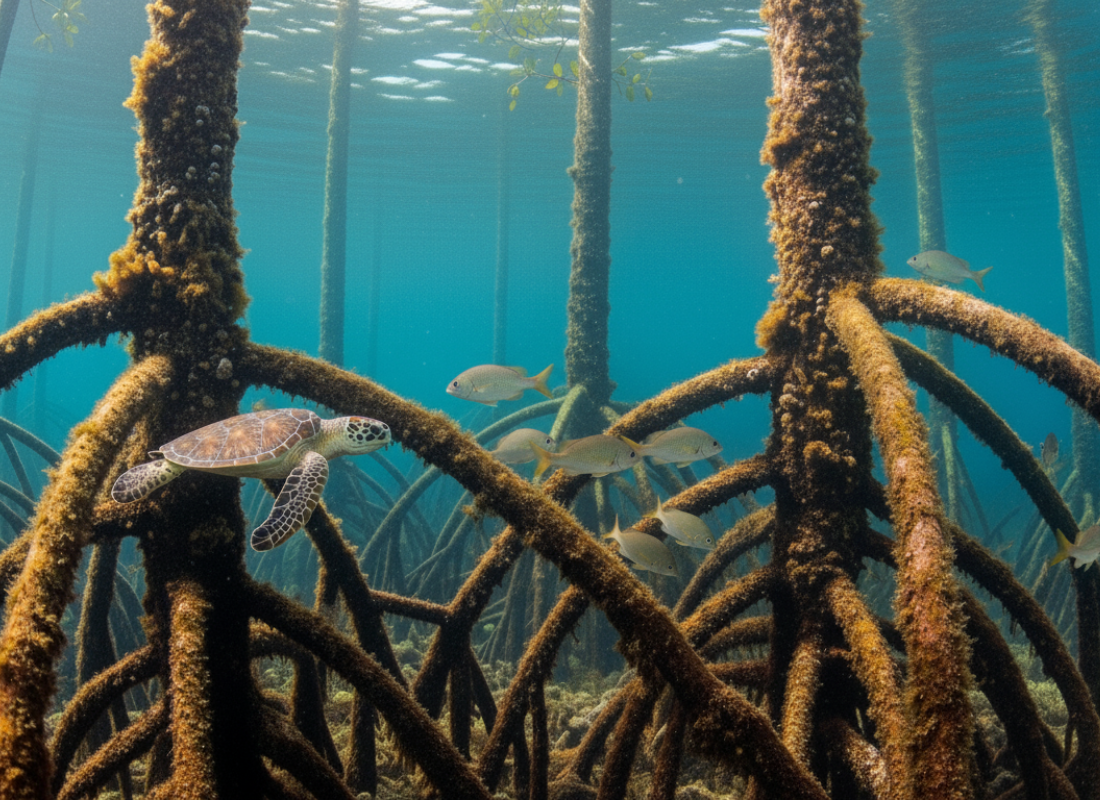
Beneath the surface of a mangrove forest, a different kind of magic unfolds. The labyrinthine root systems create a complex, sheltered habitat that serves as a critical nursery ground for an extraordinary diversity of marine life.
Fish, shrimp, crabs, and mollusks use mangrove roots as breeding grounds and juvenile habitats, sheltered from predators by the dense tangle of wood and root. It is estimated that more than 50% of tropical fish species spend at least part of their life cycle in mangrove habitats. Many of the fish that end up on dinner plates around the world — snapper, barramundi, grouper — begin their lives in the shelter of mangrove roots.
For sea turtles, mangroves play an equally vital role. These ancient reptiles feed on the seagrasses and invertebrates that thrive in and around mangrove ecosystems, and use the calm, sheltered waters of mangrove lagoons as resting and foraging grounds. The health of mangrove forests is directly linked to the health of sea turtle populations — a connection that underscores just how interconnected marine ecosystems truly are.
Coral reefs, too, depend on healthy mangroves. Mangrove forests filter the sediment and nutrient runoff from land before it reaches the open sea, keeping the waters clear enough for coral to photosynthesize and grow. Without mangroves, many coral reefs would be smothered by the silt and pollution flowing from deforested and developed coastlines.
A Forest Under Threat
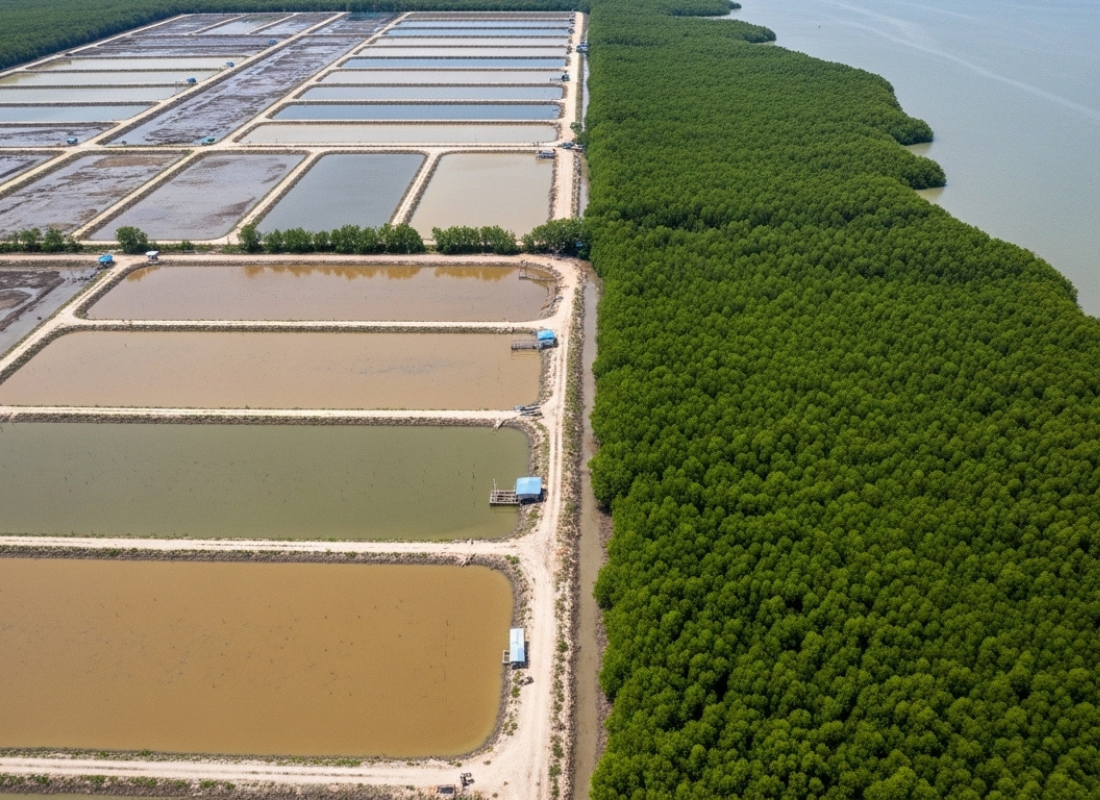
Despite their extraordinary value, mangrove forests are disappearing at an alarming rate. It is estimated that the world has lost between 35% and 50% of its mangrove cover over the past half century — a rate of destruction that rivals or exceeds that of tropical rainforests.
The culprits are familiar: coastal development, aquaculture expansion (particularly industrial shrimp farming), agricultural clearing, pollution, and the rising seas and intensifying storms of climate change itself. In many parts of Southeast Asia, vast stretches of mangrove forest have been bulldozed to make way for shrimp ponds that produce seafood for export to wealthy nations — a brutal trade-off that sacrifices long-term ecological wealth for short-term economic gain.
The communities that depend on mangroves for food, income, and coastal protection — often among the world’s poorest and most marginalized — pay the highest price for their destruction.
Restoring What We Have Lost
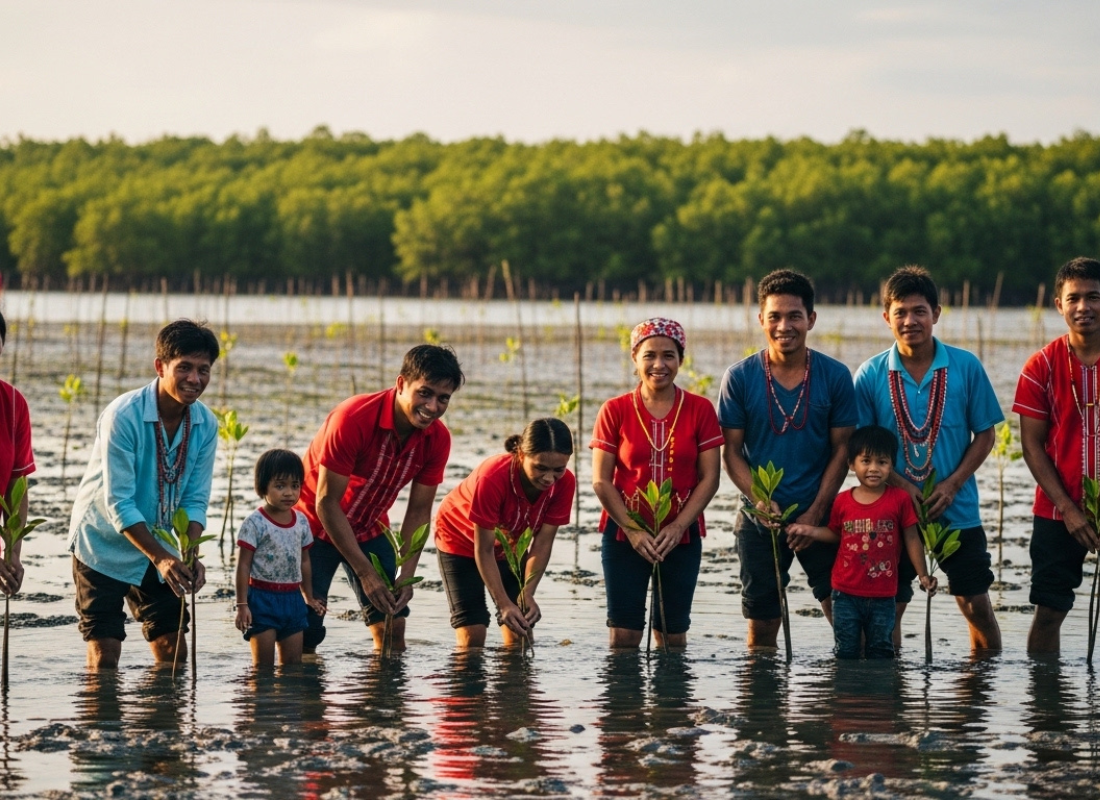
The encouraging news is that mangroves can recover — if given the chance. Around the world, restoration projects are bringing these forests back to life, with remarkable results.
In the Philippines, community-led mangrove restoration efforts have replanted millions of trees along degraded coastlines, restoring fish populations, improving coastal protection, and generating income through sustainable fishing and ecotourism. In Kenya, women’s cooperatives are leading mangrove replanting initiatives that combine conservation with economic empowerment. In Sri Lanka, post-tsunami restoration programs have helped coastal communities rebuild both their forests and their resilience.
These projects demonstrate something vital: when local communities are empowered to protect and restore their coastal ecosystems, nature responds with extraordinary generosity.
Supporting mangrove restoration — through donations, responsible consumer choices, and advocacy — is one of the most impactful things any individual or business can do for the health of our oceans and our climate.
Every Choice Connects to the Coast
At The Happy Turtle Straw, the ocean is at the heart of everything we do. Our rice straws exist because plastic straws were washing up on beaches, choking sea turtles, and breaking down into the microplastics now found in every corner of the marine environment. But the health of our oceans depends on more than eliminating plastic waste — it depends on protecting and restoring the extraordinary ecosystems, like mangrove forests, that sustain marine life from the shoreline outward.
The roots of a mangrove tree and the stalk of a rice plant may seem worlds apart. But they are part of the same story — a story about the incredible ingenuity of nature, and our responsibility to protect it.
When we choose sustainable products, support conservation efforts, and raise our voices for the ecosystems that cannot speak for themselves, we become, in our own small way, guardians of the coast.