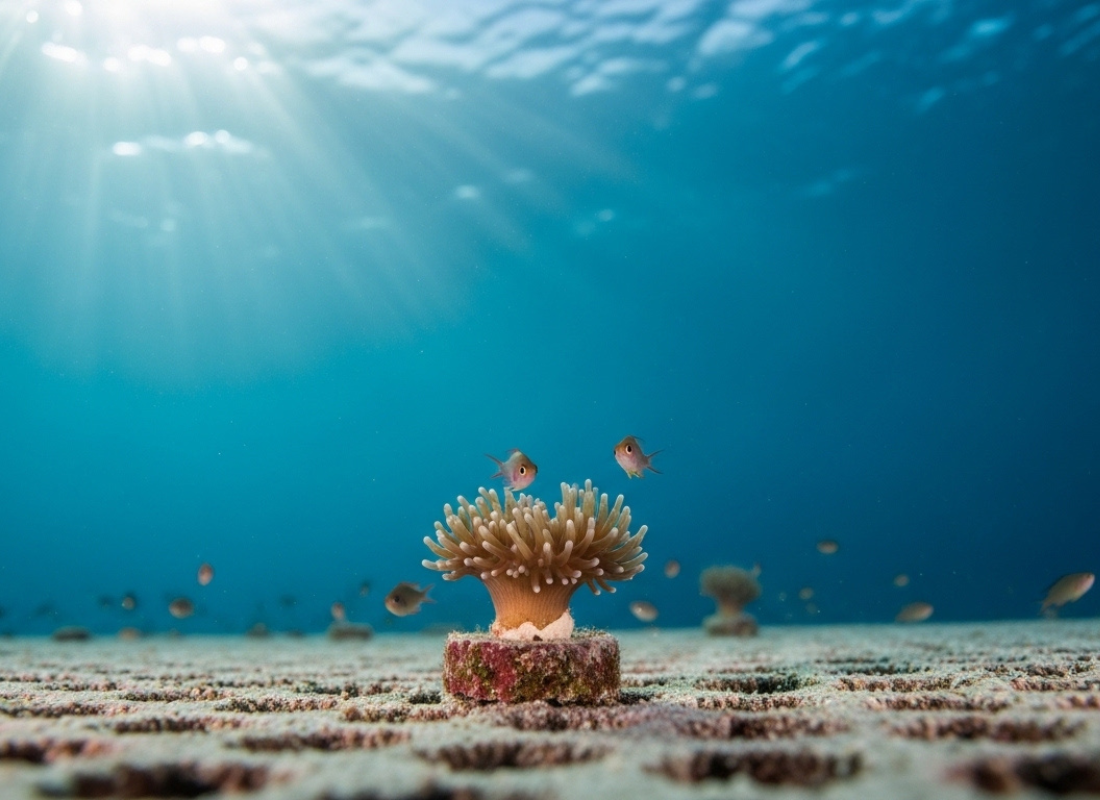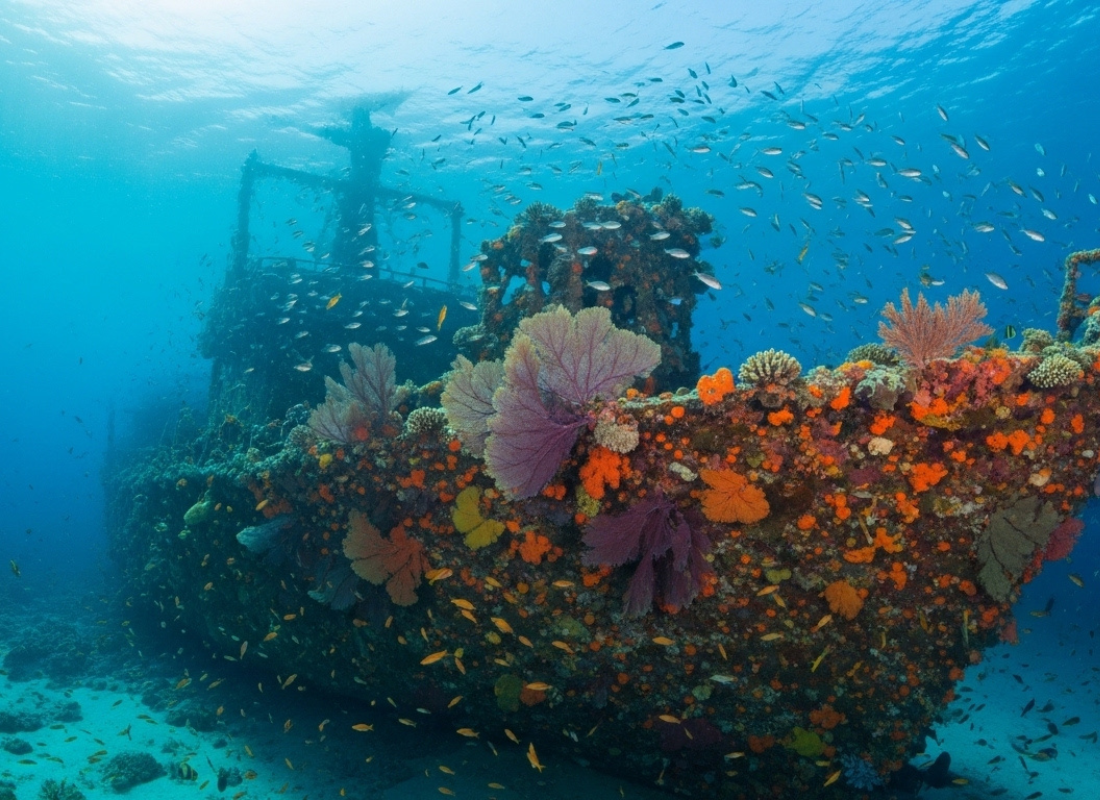
Beneath the surface of the sea, there are graveyards where coral reefs once stood. Bleached skeletons of ancient structures that took thousands of years to build, reduced to rubble by warming waters, pollution, and human carelessness. Silent, empty places where fish in their thousands once darted through a riot of color and life — now bare, pale, and still.
But something extraordinary is happening in some of those graveyards. Scientists, divers, engineers, and local communities are placing structures on the seafloor — sunken ships, steel sculptures, purpose-built modules of recycled material — and watching, with quiet amazement, as life returns. Slowly at first, then in a rush of color and movement that feels almost like a miracle.
This is the world of artificial reef restoration — one of the most hopeful and innovative frontiers in ocean conservation today. And it is rewriting what we thought we knew about the ocean’s capacity to heal.
 The Coral Crisis: Why Reefs Need Our Help
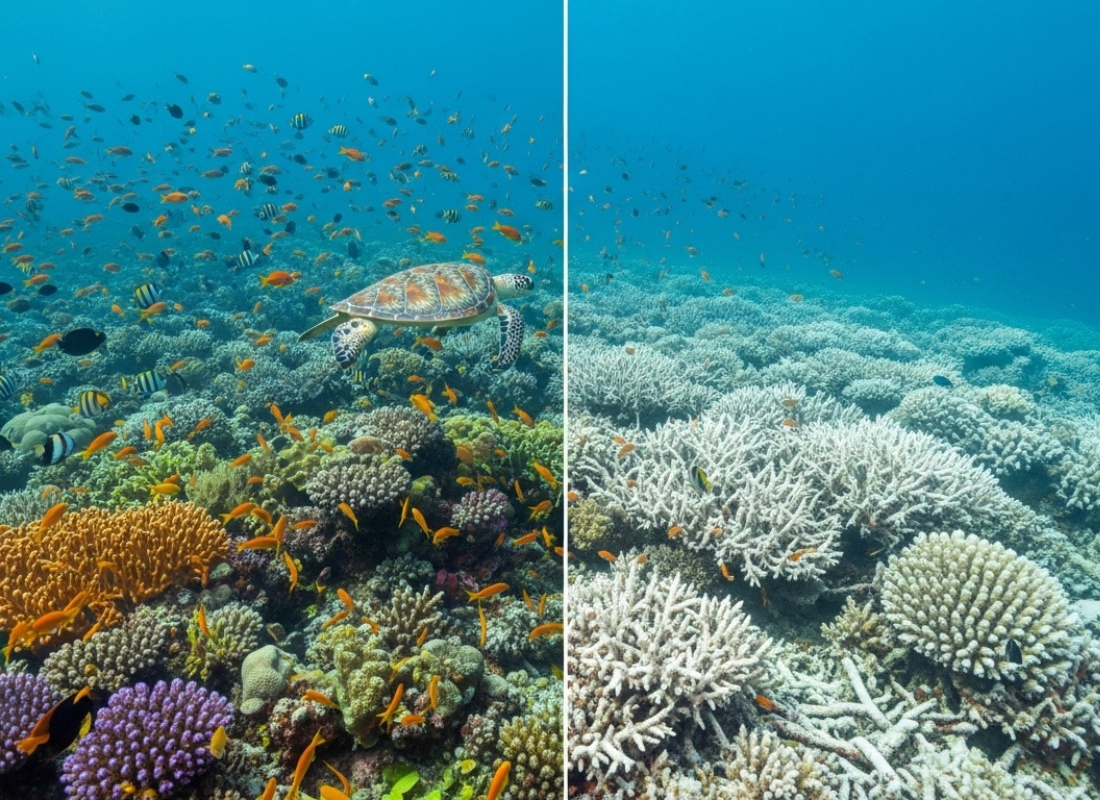
Natural coral reefs are among the most biodiverse ecosystems on Earth. Covering less than 1% of the ocean floor, they support an estimated 25% of all marine species — including hundreds of species of fish, mollusks, crustaceans, and the sea turtles that depend on reef ecosystems for feeding and shelter.
Beyond their ecological value, reefs provide critical services to humanity. They protect coastlines from wave erosion, support fisheries that feed over a billion people, generate billions of dollars in tourism revenue, and harbour compounds that have yielded life-saving medicines, from cancer treatments to antivirals.
And they are dying. It is estimated that 50% of the world’s coral reefs have been lost since the 1950s, with climate change, ocean acidification, pollution, coastal development, and destructive fishing practices driving an accelerating collapse. The Great Barrier Reef — the largest coral reef system on Earth — has lost more than half of its coral cover since 1995. In the Caribbean, reef cover has declined by up to 80% over the past four decades.
The projections are stark. At current rates of warming, scientists warn that 70 to 90% of remaining coral reefs could disappear by 2050. Without urgent intervention, the ocean floor risks becoming a global wasteland — impoverished, silent, and stripped of the extraordinary diversity that makes it one of the wonders of the living world.
Artificial reefs are not a substitute for addressing the root causes of reef decline — that requires cutting carbon emissions, reducing pollution, and ending destructive fishing. But they are a powerful tool for accelerating recovery and rebuilding the structural complexity that marine life depends upon, buying time while the deeper work of systemic change is done.
 What Is an Artificial Reef?
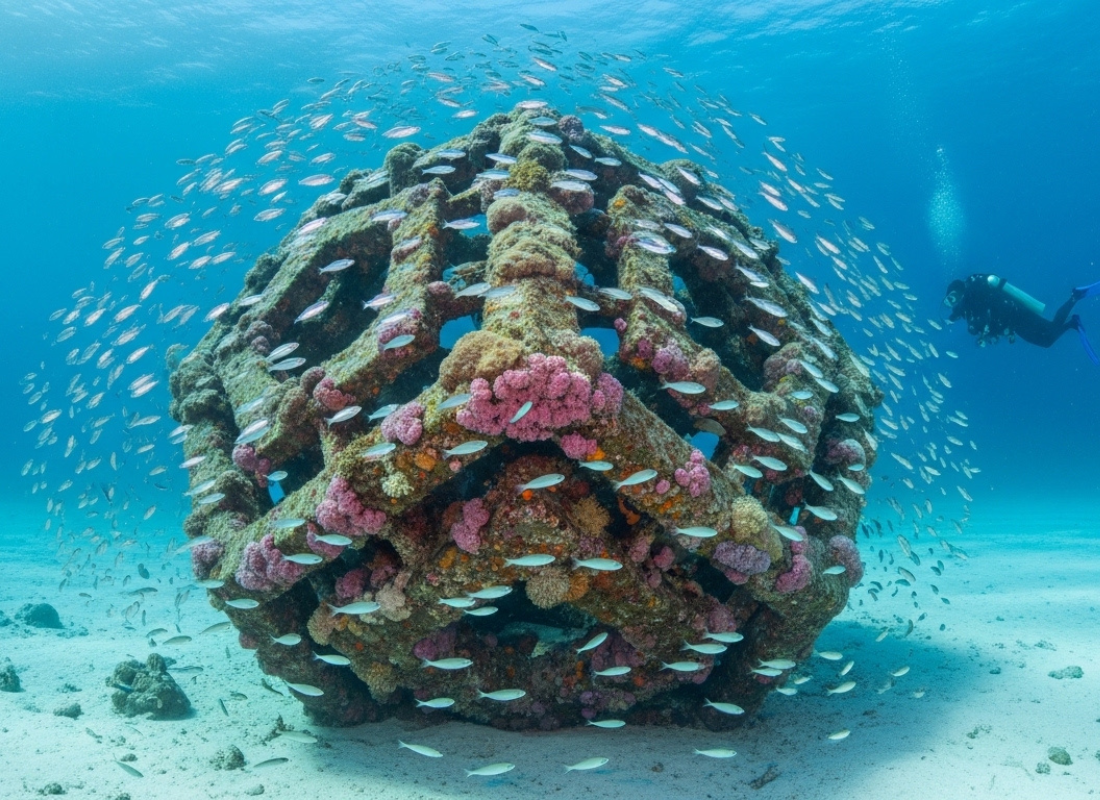
An artificial reef is any submerged structure — natural or man-made — that is placed on the seafloor to mimic the physical complexity of a natural reef, providing hard surfaces for corals and other sessile organisms to attach to, and shelter for fish, invertebrates, and other marine life.
The concept is not new. Fishers in Japan have been sinking stones and bamboo structures to attract fish for centuries. In the eighteenth century, South Carolina fishers used brush piles to create fishing hotspots in shallow coastal waters.
What is new is the scale, sophistication, and scientific rigor being brought to artificial reef design in the twenty-first century — and the growing recognition that these structures can do far more than attract fish. They can actively rebuild ecosystems.
Artificial reefs come in many forms. Decommissioned ships and oil platforms, when carefully cleaned of contaminants and deliberately sunk, become instant reef habitats — their complex surfaces and internal spaces colonized by corals, sponges, and fish within months. Purpose-built concrete and steel modules, designed to maximize surface area and structural complexity, are deployed at carefully selected sites to create optimal growing conditions for coral recruitment.
Most innovatively, cutting-edge projects are using 3D-printed reef structures made from calcium carbonate — the same material as natural coral skeletons — designed by algorithms to replicate the precise geometry of healthy reef systems. These biomimetic structures provide ideal surfaces for coral larvae to settle on and grow, dramatically accelerating the early stages of reef development.
 Coral Gardening: Rebuilding Reef by Reef
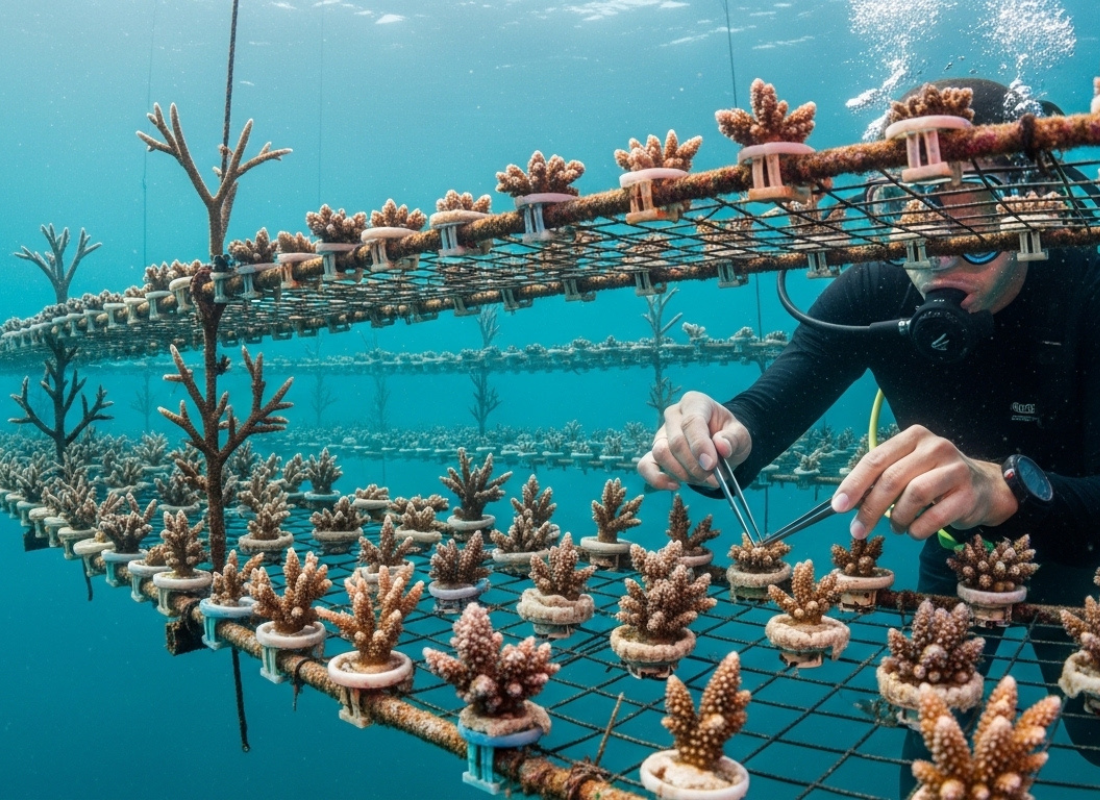
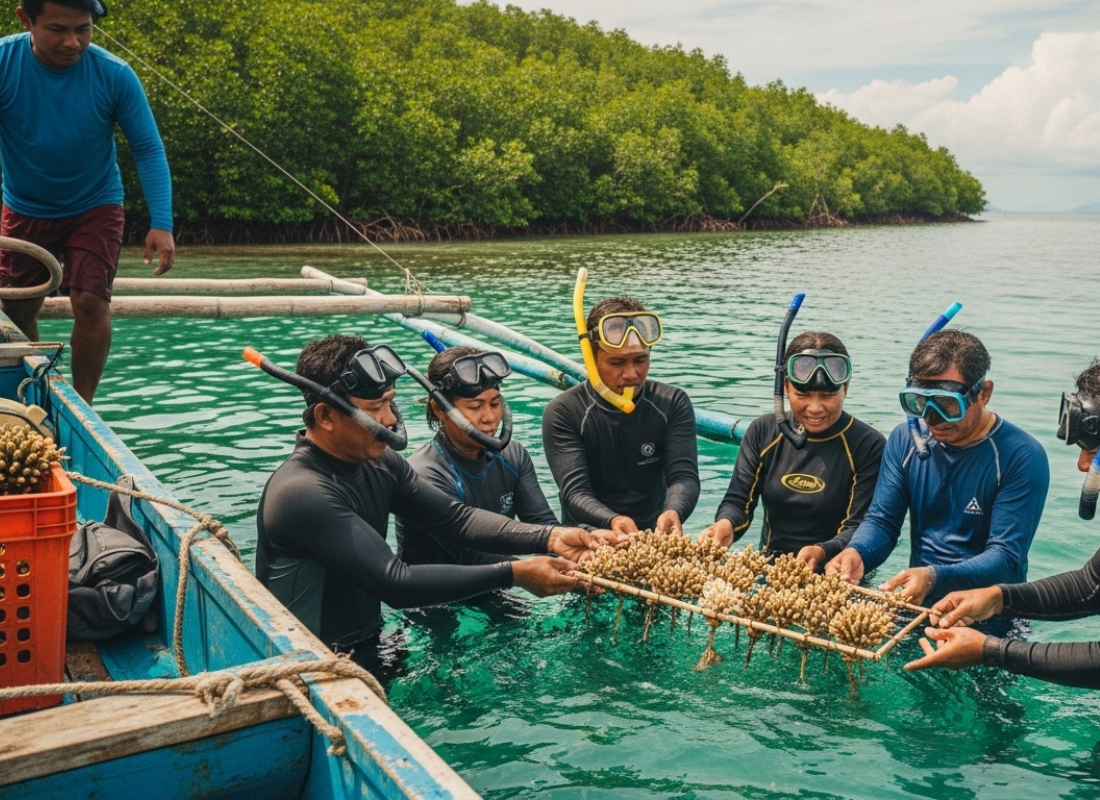
Alongside structural restoration, a technique known as coral gardening is transforming reef recovery efforts around the world. The process works much like a nursery for plants — coral fragments are collected from healthy reef sections, or raised from larvae in underwater or land-based nurseries, then transplanted onto degraded reef areas once they have grown large enough to survive.
Organizations like the Coral Restoration Foundation in Florida and SECORE International have pioneered coral gardening at scale, growing hundreds of thousands of coral fragments annually on underwater tree-like structures and transplanting them onto bleached or damaged reefs.
In some projects, corals grown from heat-tolerant parent colonies are being used to create reefs that are more resilient to the warming waters of a changing climate — a form of assisted evolution that gives reef ecosystems a fighting chance against future bleaching events.
The results, in the right conditions, can be extraordinary. Restored reef sites in the Florida Keys, the Caribbean, and the Indo-Pacific have seen fish diversity and abundance rebound significantly within just a few years of transplantation — a testament to the ocean’s remarkable capacity for recovery when given the right conditions and the right support.
 Unexpected Reef Builders: Ships, Sculptures, and Subway Cars
Some of the most striking artificial reef projects involve the most unlikely materials.
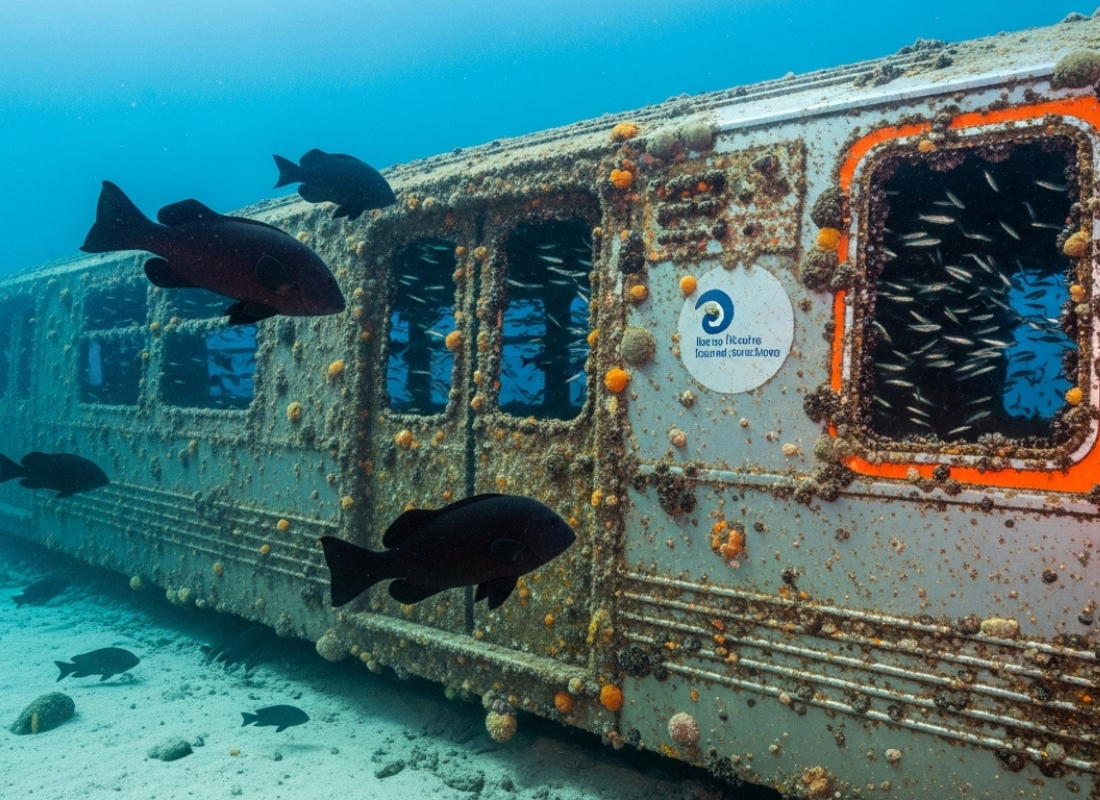
Off the coast of New Jersey and Virginia, thousands of decommissioned New York City subway cars were sunk between 2001 and 2010, creating an extensive reef complex that has become one of the most productive fishing grounds on the US East Coast.
Within months of sinking, the cars were covered in mussels, barnacles, and sea anemones. Within years, they had attracted a remarkable diversity of fish, including black sea bass, tautog, and summer flounder.
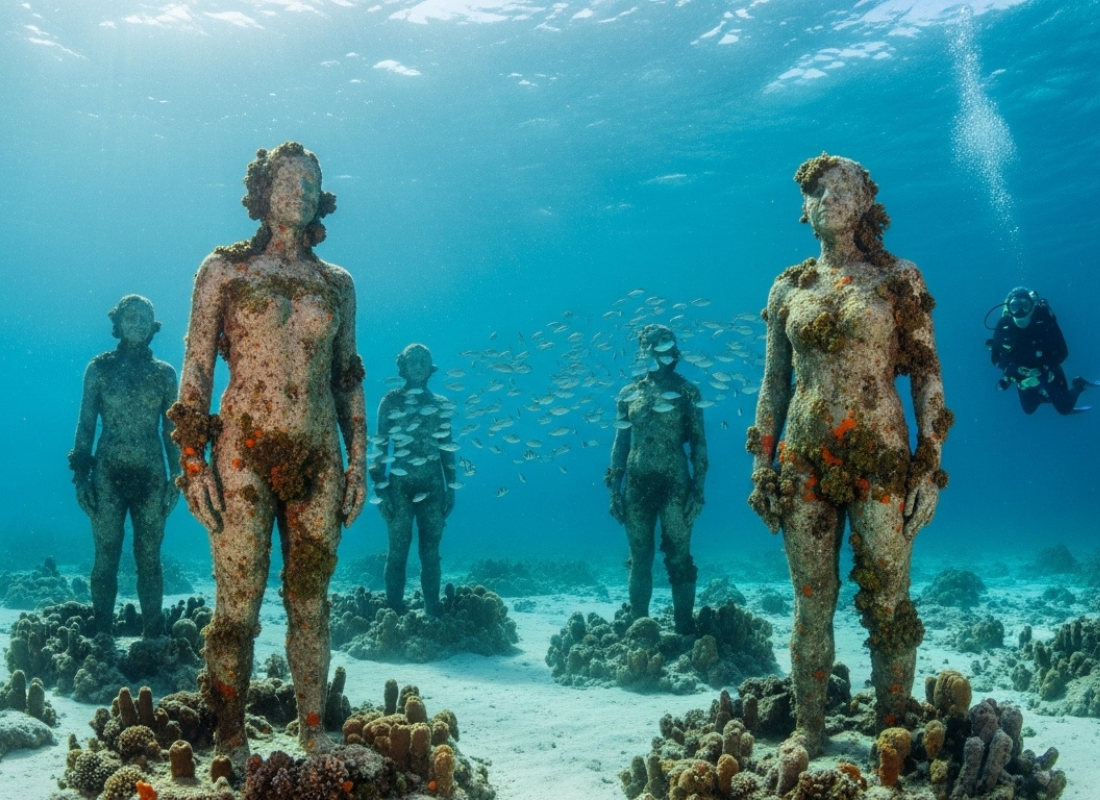
In the waters off Cancún, Mexico, sculptor Jason deCaires Taylor has created an extraordinary underwater museum — hundreds of life-sized human figures cast in pH-neutral marine concrete and placed on the seafloor, their still forms now encrusted with coral and sponge and alive with fish.
What began as an art installation has become a genuine reef ecosystem, drawing divers away from the nearby natural reefs and giving those fragile systems space to recover.
In the Maldives, where rising seas threaten to swallow entire islands, coral reef restoration projects are using artificial structures not only to rebuild marine ecosystems but to protect coastlines — mirroring the role that healthy natural reefs play as living wave breaks, a function that billions of dollars of concrete sea walls could never fully replicate.
 Sea Turtles and the Return of Life
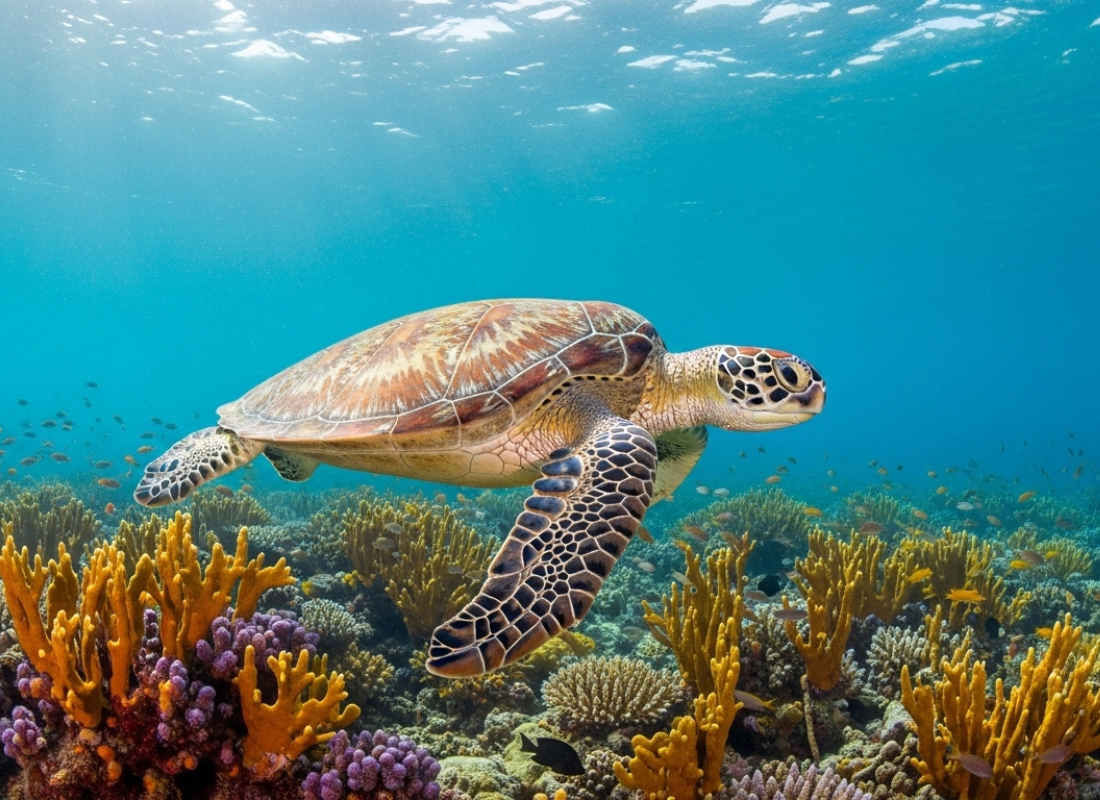
For sea turtles, the restoration of reef ecosystems is nothing less than the restoration of their world. Healthy reefs provide the seagrass beds and algae that green sea turtles depend on for food, the sponges that hawksbill turtles feed on almost exclusively, and the rich invertebrate communities that sustain loggerhead and leatherback populations throughout their long ocean journeys.
As artificial reef projects rebuild the structural complexity of degraded marine environments, they create the conditions for the prey species that sea turtles depend on to return and flourish. Reef restoration and sea turtle conservation are not separate endeavors — they are two expressions of the same commitment to a living, breathing ocean.
 Community at the Heart of Restoration
The most successful reef restoration projects share a common characteristic: they are built with and for the communities that live alongside the ocean.
In the Philippines, village-level coral reef management programs have empowered fishing communities to establish and enforce their own marine protected areas, combining reef restoration with sustainable fishing practices and alternative livelihood programs.
In Indonesia, the Coral Triangle Initiative has brought together governments, NGOs, and local communities across six nations to coordinate reef protection and restoration at regional scale.
In Kenya, women’s groups are leading reef monitoring and restoration efforts, combining conservation with community development in ways that create lasting ownership and commitment.
These projects recognize a fundamental truth: the ocean cannot be saved from the outside. Its protection depends on the people who live closest to it, who understand it most deeply, and who have the most to lose if it disappears.
 Building the Future, One Reef at a Time
Every coral fragment planted, every structure sunk, every community that chooses to protect rather than deplete; these acts of care remind us why we do what we do.
Our rice straws exist because a sea turtle somewhere mistook a plastic straw for food. Because a reef somewhere was smothered by the plastic waste that accumulates in every corner of the ocean. Because the connection between the choices we make on land and the health of the sea beneath the surface is direct, measurable, and deeply real.
Rewilding the ocean is possible. The evidence is already there — in the fish returning to a sunken subway car, in the coral growing on a 3D-printed skeleton, in the sea turtle gliding through a restored reef that was bare rubble just a decade ago.
The ocean wants to live. It just needs us to get out of the way — and sometimes, to lend a hand.