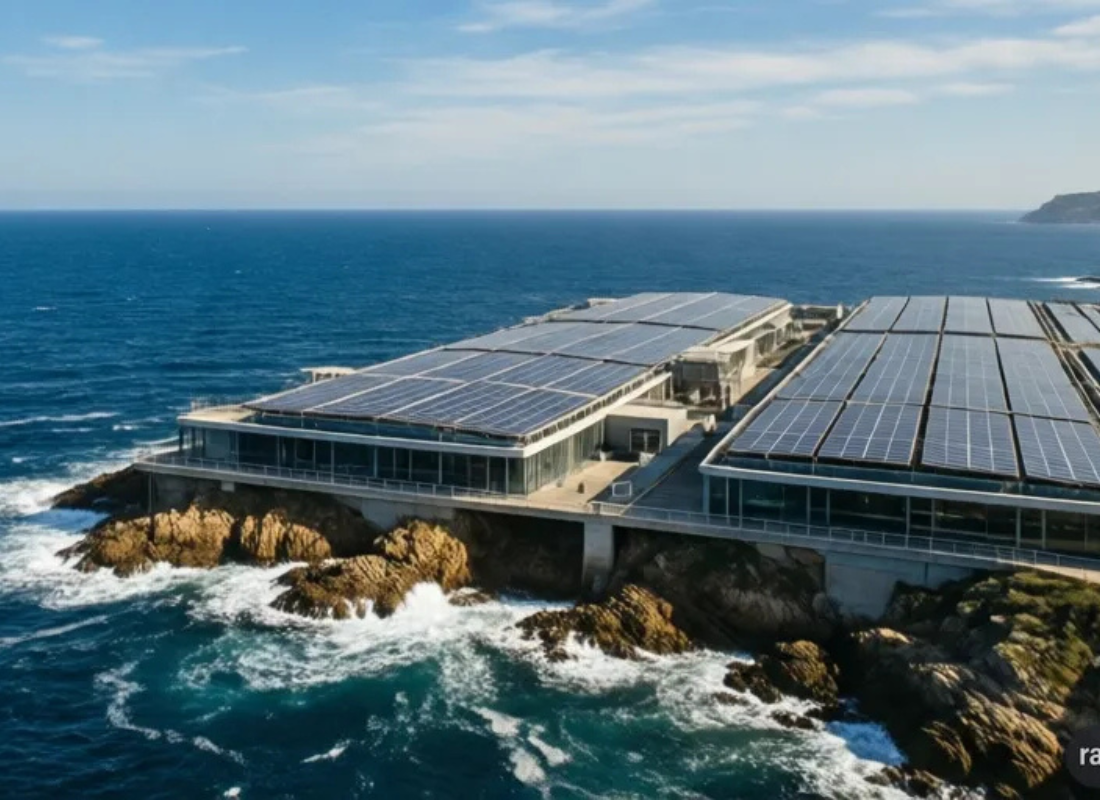
Water covers more than 70% of our planet. And yet, clean, fresh water is one of the most precious and threatened resources on Earth. Of all the water on the planet, only 3% is fresh — and two thirds of that is locked in glaciers and ice caps, inaccessible to human use.
The remainder — the rivers, lakes, and aquifers that sustain all terrestrial life — is under extraordinary pressure from population growth, agricultural demand, pollution, and the deepening drought cycles driven by climate change.
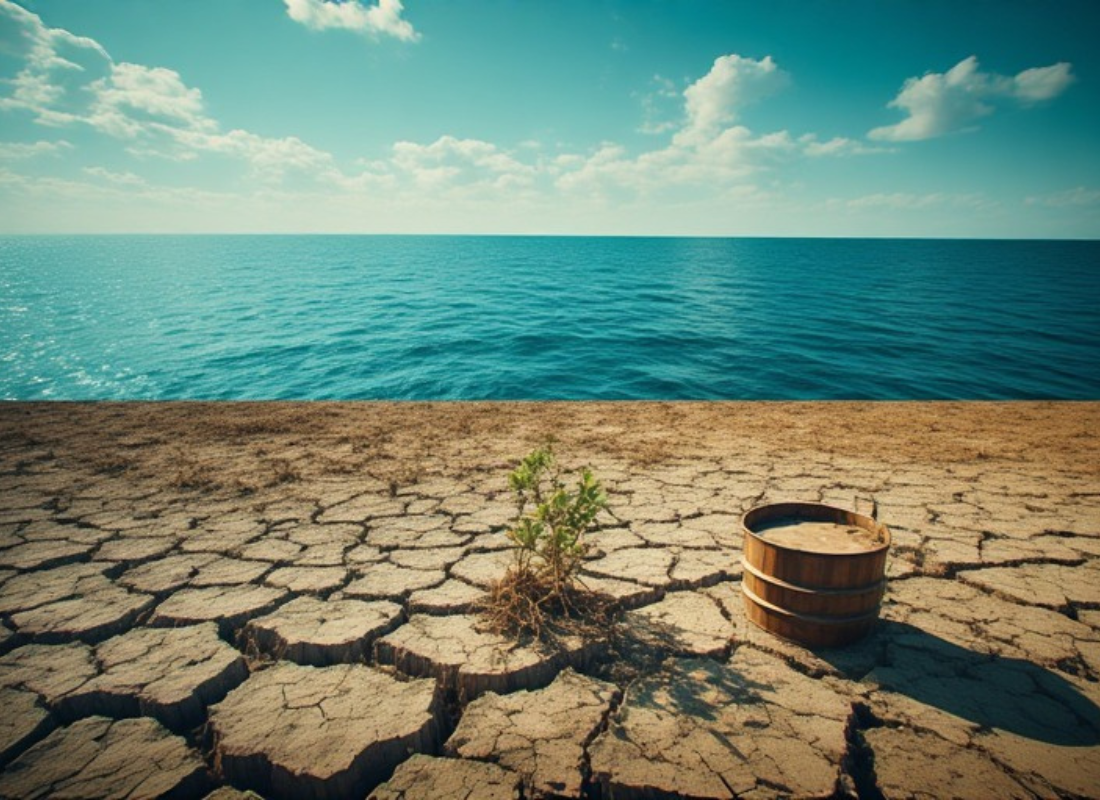
Today, more than 2 billion people live in water-stressed countries. By 2050, that number could rise to 5 billion. In a world surrounded by ocean, the cruel irony of water scarcity is one of the defining paradoxes of our time.
The solution, it seems, is floating just offshore. The ocean holds 97% of the world’s water. If we could convert even a fraction of that saltwater into fresh, drinkable water — affordably, efficiently, and without destroying the marine ecosystems we depend on — we could transform the global water crisis.
That is the promise of desalination. And thanks to a wave of eco-friendly technological innovation, that promise is closer to reality than ever before.
 How desalination works
Desalination is the process of removing salt and other dissolved minerals from seawater or brackish water to produce fresh water suitable for drinking, agriculture, or industrial use. It is not a new idea — humans have been distilling seawater since ancient times — but modern desalination at industrial scale only became feasible in the mid-twentieth century.
Today, there are two dominant desalination technologies:
Thermal desalination heats seawater until it evaporates, then condenses the steam to produce fresh water, leaving the salt behind. It is effective but extraordinarily energy-intensive, making it expensive to operate and carbon-heavy unless powered by renewable energy.
Reverse osmosis (RO) forces seawater at high pressure through semi-permeable membranes that allow water molecules to pass but block salt and other contaminants. It is the dominant technology in modern desalination plants, accounting for more than 65% of global desalination capacity, and it is significantly more energy-efficient than thermal methods — though still far from cheap or clean by default.
There are currently more than 21,000 desalination plants operating in over 150 countries, producing around 100 million cubic meters of fresh water per day. The Middle East and North Africa lead the world in desalination capacity, with countries like Saudi Arabia, the UAE, and Qatar depending on it for a significant share of their municipal water supply.
But conventional desalination comes with serious environmental costs — and that is precisely where the new generation of sustainable technologies is stepping in.
 The environmental problem with conventional desalination
For all its promise, traditional desalination has a troubling environmental footprint that cannot be ignored.
Energy consumption is the most significant issue. Conventional reverse osmosis plants are energy-hungry, and the majority of the world’s desalination capacity is powered by fossil fuels — meaning that producing fresh water comes at the cost of carbon emissions that accelerate the very climate change driving water scarcity in the first place. It is, in the starkest terms, a vicious cycle.
Brine discharge poses an equally serious threat to marine ecosystems. For every liter of fresh water produced, desalination plants generate roughly 1.5 liters of hypersaline brine — water with salt concentrations up to twice that of the ocean.
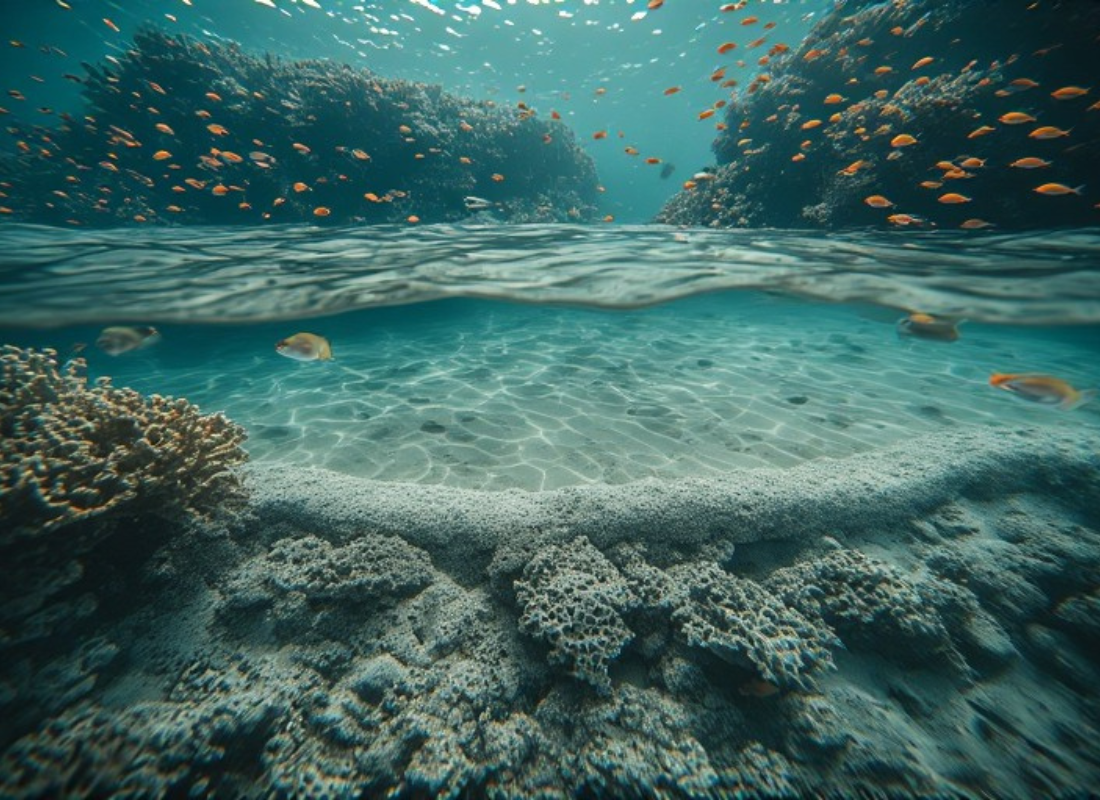
When this brine is discharged back into the sea, it sinks to the seafloor, creating dead zones where the salt concentration is too high for most marine life to survive. Coral reefs, seagrass beds, and the rich seafloor communities that support fish populations — including those feeding sea turtles — are particularly vulnerable.
Chemical discharge is a further concern. Desalination plants use antiscalants, coagulants, and disinfectants in their processes, some of which can be toxic to marine organisms if not properly managed before discharge.
These are not reasons to abandon desalination — in a water-scarce world, the technology is too important to set aside. But they are powerful reasons to innovate, and that is exactly what scientists and engineers around the world are doing.
 Solar-powered desalination: letting the sun do the work
One of the most elegant and promising advances in sustainable desalination is the coupling of reverse osmosis systems with solar energy — using the abundant sunlight available in the world’s most water-stressed regions to power the desalination process with zero carbon emissions.
Solar-powered desalination plants are already operating in remote communities in Australia, sub-Saharan Africa, and the Middle East, providing clean water to populations that were previously entirely dependent on trucked-in supplies or unsafe groundwater.
The cost of solar power has plummeted by more than 90% in the past decade, making solar desalination increasingly competitive with fossil-fuel-powered alternatives.
Researchers at MIT and other leading institutions are developing next-generation solar desalination devices small enough to deploy in individual households — compact, low-cost units that could bring clean water to remote and off-grid communities around the world without any connection to the electricity grid.
 Forward osmosis and biomimicry: nature as engineer
Among the most exciting emerging technologies in sustainable desalination is forward osmosis — a process that uses the natural osmotic pressure difference between two solutions to draw water across a membrane, requiring far less energy than pressure-driven reverse osmosis.
Forward osmosis is still in the early stages of commercial development, but its potential to dramatically reduce the energy footprint of desalination has attracted significant research investment.
When combined with waste heat recovery systems — using the heat generated by industrial processes or solar collectors to drive the separation — forward osmosis could slash desalination energy costs by up to 80%.
Even more extraordinary is the field of biomimetic desalination — technology inspired directly by nature. Mangrove trees, as we explored in a previous article, have evolved sophisticated mechanisms for filtering salt from seawater through their roots.
Certain fish and marine mammals excrete salt through specialized cells with remarkable efficiency. Scientists are studying these biological systems and translating their principles into synthetic membranes and filtration technologies that mimic nature’s elegant solutions.
The aquaporin protein — a water channel found in virtually all living cells, including those of mangrove roots — has inspired the development of aquaporin-based membranes that allow water to pass through at extraordinary speed while blocking salt with near-perfect efficiency. These biomimetic membranes could represent the next leap forward in low-energy desalination.
 Smarter brine management
Addressing the brine discharge problem is just as important as reducing energy consumption, and here too innovation is offering new solutions.
Zero liquid discharge (ZLD) systems aim to eliminate brine discharge entirely by processing the concentrated saltwater until all the water is recovered and only dry salt remains.
This salt can then be sold for industrial use, turning what was once a pollutant into a valuable resource. ZLD technology is currently expensive and energy-intensive, but costs are falling as the technology matures.
Brine mining takes this concept further, extracting valuable minerals — lithium, magnesium, potassium, and even rare earth elements — from desalination brine before it is discharged.
As demand for lithium for electric vehicle batteries surges, brine mining could turn desalination waste into a significant economic and strategic asset, fundamentally changing the cost equation of the entire industry.
Engineered discharge systems — carefully designed outflow structures that dilute and disperse brine before it reaches sensitive habitats — can significantly reduce the impact of discharge on marine ecosystems when ZLD is not yet feasible.
 Small-scale solutions for a global problem
Not every water crisis requires an industrial-scale solution. Some of the most impactful innovations in sustainable desalination are designed for small communities, remote islands, and disaster-affected regions where large infrastructure is impossible.
Portable solar stills — simple devices that use sunlight to evaporate and condense seawater — can provide emergency drinking water with zero energy input and zero emissions.
Wave-powered desalination systems harness the kinetic energy of ocean waves to drive the desalination process, offering a perpetual, renewable energy source in coastal environments.
Atmospheric water generators, while not strictly desalination, can extract fresh water directly from humid air in coastal regions, complementing desalination as part of a diversified water supply strategy.
These small-scale solutions will not replace large desalination plants — but they can bring clean water to the communities that need it most, without waiting for major infrastructure investment.
 Water, ocean, and the thread that connects us
Our commitment to the ocean runs deep. We know that the health of our seas is inseparable from the health of our planet — and that technologies which interact with the marine environment carry a profound responsibility to do so with care and respect.
Sustainable desalination, done right, is not a threat to the ocean. It is a gift — a way of drawing on the sea’s abundance without depleting its life or poisoning its waters. Like a rice straw that gives new purpose to agricultural products, the best desalination technologies find ways to meet human needs without borrowing against the future.
Fresh water is life. And in a world where that life is increasingly precious, the innovations that protect it — for people, for sea turtles, for mangroves, for all the creatures that depend on clean, balanced oceans — are among the most important work being done on Earth today.